Optimal Cycling Cadence: Muscle Fiber Science Behind RPM
By Marta Kowalska • 7th Feb
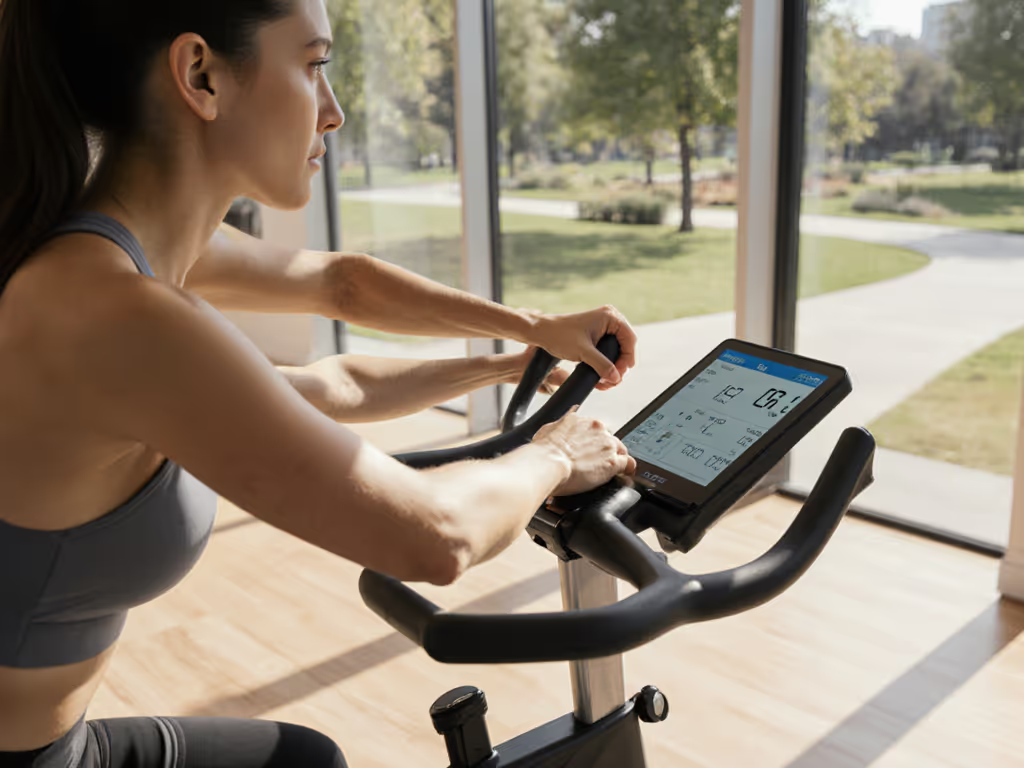
When you're pedaling through early morning sessions on your exercise bike, understanding the exercise bike cadence science could mean the difference between sustainable fitness and burnout. While "optimal cycling cadence" is often discussed in cycling circles, the reality is far more nuanced than any single RPM number can capture. As someone who's diagnosed countless systems, both mechanical and physiological, I've learned that true optimization requires understanding how your body works with your equipment, not against it.
Why There's No Universal "Magic Number" for Cadence
The most common misconception is that one cadence works best for all riders and intensities. Research reveals a far more complex picture: optimal cadence increases sigmoidally (in an S-shaped curve) with exercise intensity. At very low intensities, it might be as low as 45 RPM, but climbs to approximately 85 RPM at maximal aerobic effort. This pattern holds true regardless of athletic discipline or experience level (a crucial insight often lost in marketing claims about "ideal" pedaling rates).
Standard fasteners save futures. So does understanding the biomechanical reality behind your RPMs.
How Cadence Changes Across Intensity Zones: A Metabolic Perspective
Your body isn't a static machine. It adapts to demand. Here's how optimal cadence shifts at key metabolic thresholds, based on recent systematic analysis of force-velocity relationships:
- LT1 (First Lactate Threshold): 66.18 ± 3.00 RPM
- FATmax (Maximal Fat Oxidation): 76.01 ± 3.36 RPM
- MLSS (Maximal Lactate Steady State): 82.24 ± 2.59 RPM
- VO₂max (Maximal Oxygen Uptake): 84.49 ± 2.66 RPM
This progression isn't random. To apply these zones in practice, use our Zone 2 training guide for heart-rate targets and progression. It reflects a methodical shift in muscle fiber recruitment as intensity increases. At lower intensities where oxidative metabolism dominates, slower-twitch type I fibers operate most efficiently around 65 RPM. As you push harder and recruit more glycolytic type IIa fibers, the optimal cadence increases toward 85 RPM.
The Muscle Fiber Recruitment Connection: Why Cadence Matters
The muscle recruitment cycling cadence relationship follows a biological principle that explains why "grinding" at 60 RPM might feel sustainable for short periods but problematic over time. At lower cadences:
- Higher force per pedal stroke is required
- More slow-twitch fibers are engaged
- Less neural activation is needed per revolution
- Metabolic efficiency is higher (less oxygen consumed for same power)
However, this comes at a cost: increased muscular fatigue. For technique tweaks that shift emphasis between quads, glutes, and calves, see our muscle targeting guide. That's why many riders (even when data suggests 60 RPM is metabolically optimal) naturally select higher cadences. Your body's wisdom often trumps pure efficiency metrics when considering total ride sustainability.
When you push cadence to 120 RPM during high-intensity intervals (≥90% VO₂max), the physiological demands shift dramatically. The rapid muscle contraction-relaxation cycle increases reliance on fast-twitch fibers and anaerobic pathways, explaining the higher metabolic costs and lactate production observed at these rates.
The Performance-Efficiency Paradox
Here's where the cadence performance relationship gets interesting. While research consistently shows the metabolic optimum is around 60 RPM (a pace many would describe as a "grind"), real-world cyclists often prefer 90-105 RPM during long efforts. This isn't inefficiency; it's strategic load management.
The higher cadence:
- Reduces muscular fatigue by distributing force across more revolutions
- Lowers perceived exertion at threshold efforts
- Allows better blood flow to working muscles
- Minimizes vibration transfer through bike frames
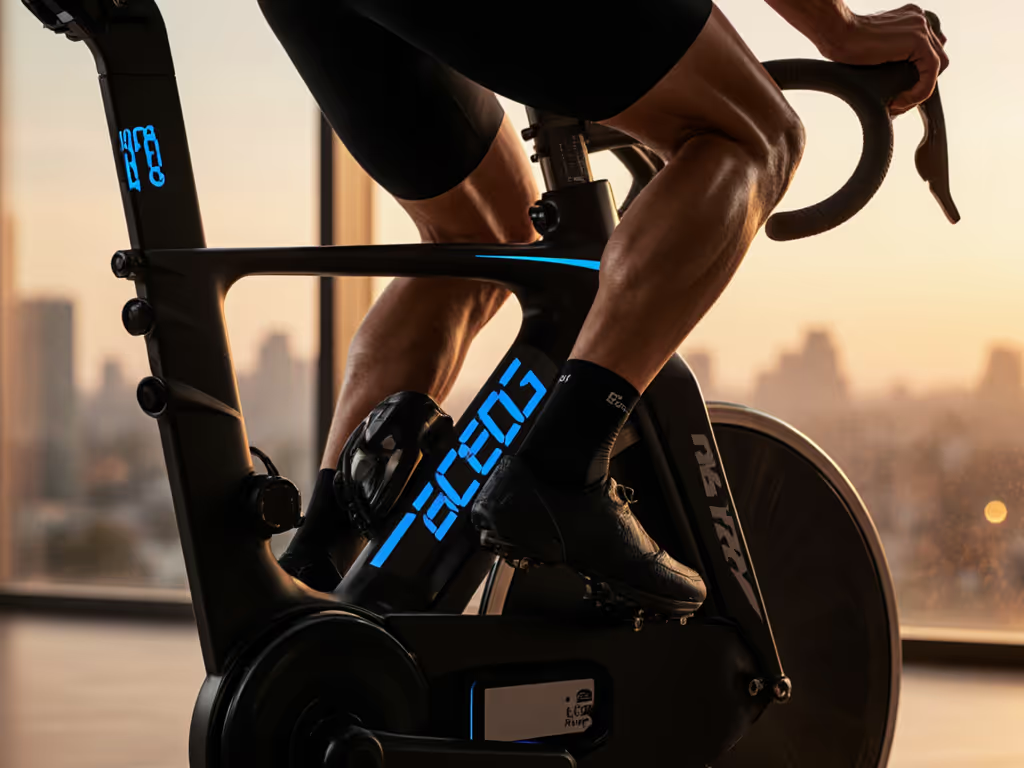
This is particularly relevant for home exercisers. For vibration control, layout, and quiet operation tips, see our home bike setup guide. That subtle vibration difference between 85 and 100 RPM? It could mean the difference between a quiet morning ride that doesn't disturb sleeping children and one that transmits enough vibration through your apartment floor to wake the neighbors. I've diagnosed this exact issue in countless homes (sometimes it's equipment noise, but often it's simply improper cadence selection for the intensity).
Finding Your Personal Optimal Cadence
Rather than chasing a universal number, take this tool-specific approach to discover your ideal range:
- Baseline test: At moderate intensity (conversational pace), ride 5 minutes at 60 RPM, 5 at 80 RPM, 5 at 100 RPM. Note perceived exertion and any vibration through your bike frame.
- Threshold check: At tempo effort (where conversation becomes difficult), monitor lactate threshold cadence. Most find their sweet spot between 80-85 RPM.
- High-intensity verification: During VO₂max intervals, note where your power output peaks. Many cyclists discover their RPM efficiency metrics shift upward here. For structured VO2max intervals and power-based sets, use our pro cycling intervals guide.
- Noise diagnostic: Use your phone's vibration sensor app to measure transmission through your floor at different cadences. Even a 5 RPM change can dramatically reduce household disruption.
This methodical process respects your equipment's limitations while optimizing your physiology. Remember that last smart bike I helped rescue from the landfill? The "problem" wasn't electronic (it was simply that the rider had been grinding at 50 RPM when their physiology demanded 75 RPM for that intensity). Fix first, then decide if upgrade money is deserved.
Practical Application for Home Riders
Your equipment matters as much as your physiology when optimizing cadence. For evidence-based decisions:
- Verify accuracy: Calibrate your bike's cadence sensor monthly using a mechanical tachometer
- Check stability: Ensure your bike is properly leveled (uneven surfaces alter force distribution)
- Monitor drift: Track whether your bike's cadence readings change over time (a common issue with proprietary sensors)
The most reliable systems provide transparent calibration methods and use standard components you can verify and maintain. If your readings drift or hardware needs tuning, follow our exercise bike maintenance guide for step-by-step fixes. Anything requiring a subscription just to access basic calibration? That's not ownership (that's rental with extra steps).
Final Thoughts on Sustainable Cadence Strategy
True optimization acknowledges that both your body and your equipment exist in a dynamic system. The optimal cadence isn't a fixed target but a moving point along your intensity spectrum, mediated by your unique physiology and your bike's mechanical reality.
Understanding this lactate threshold cadence progression helps you ride smarter (not harder) while respecting your home environment. Whether you're squeezing in an early morning session before the household wakes or pushing hard intervals after work, matching your RPM to your intensity zone prevents undue stress on both your body and your living space.
For those ready to dive deeper into the biomechanics of efficient riding, I recommend exploring the original research on force-velocity relationships in cycling performance. The data is surprisingly accessible, and understanding it puts you in control of your training (not captive to marketing claims or proprietary algorithms). Your body's signals, properly interpreted, are the most reliable metrics you'll ever have.
Related Articles