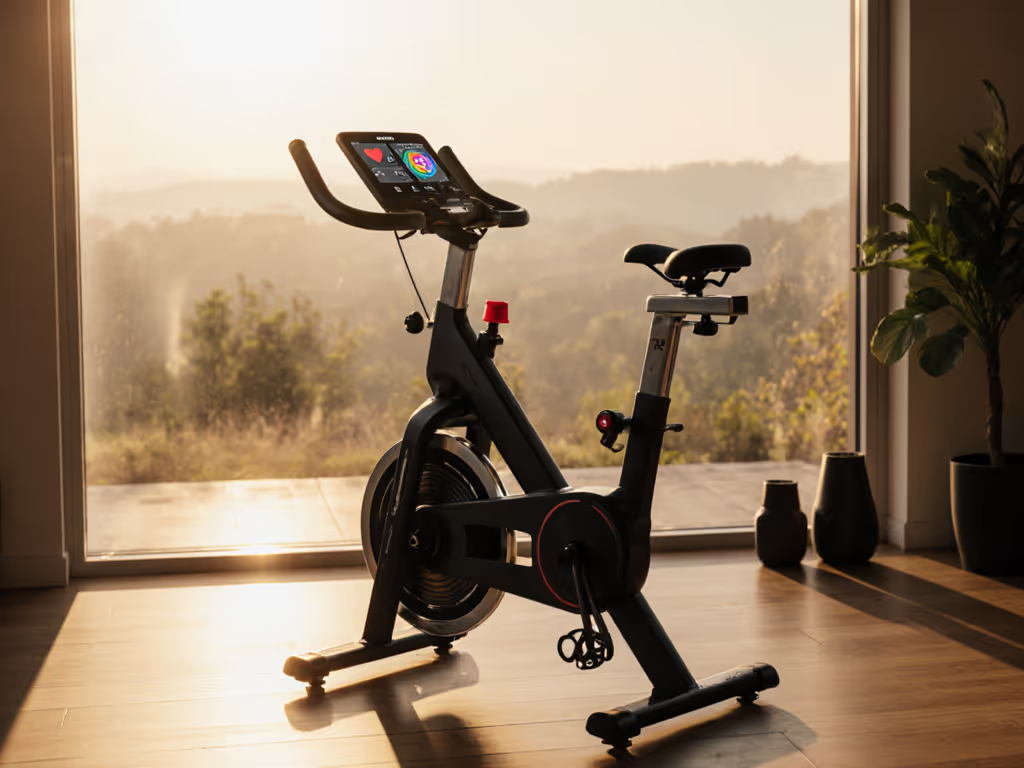
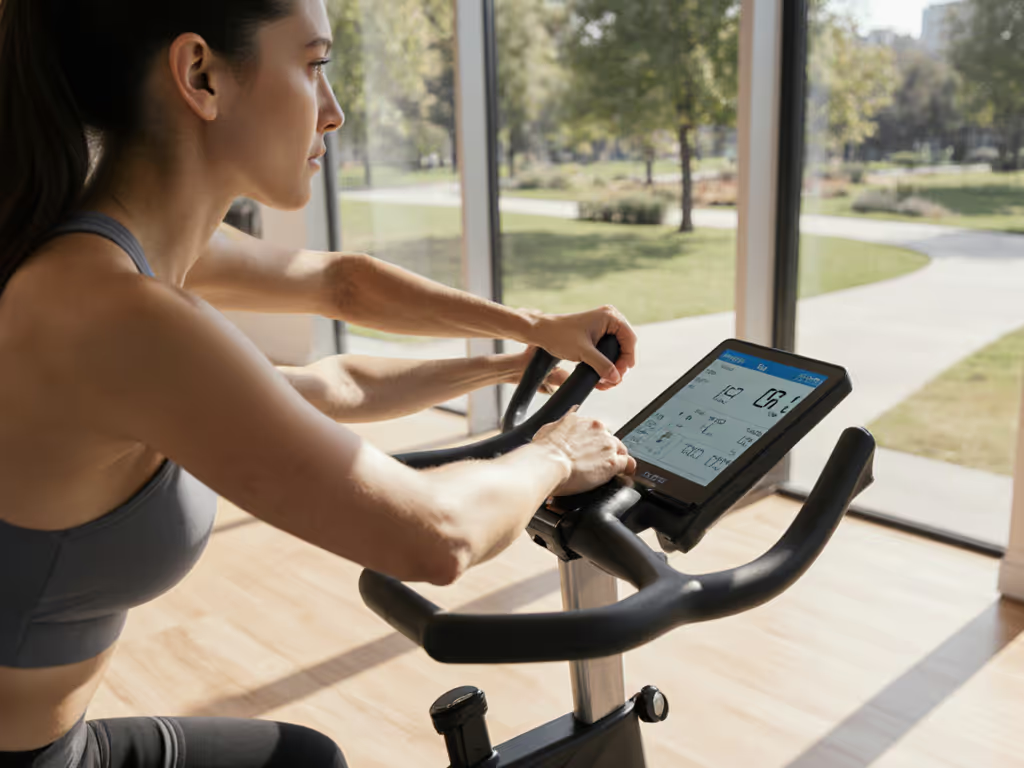
Exercise Bike Ankle Rehabilitation: Progressive Protocols
By Jordan Reyes • 31st Mar
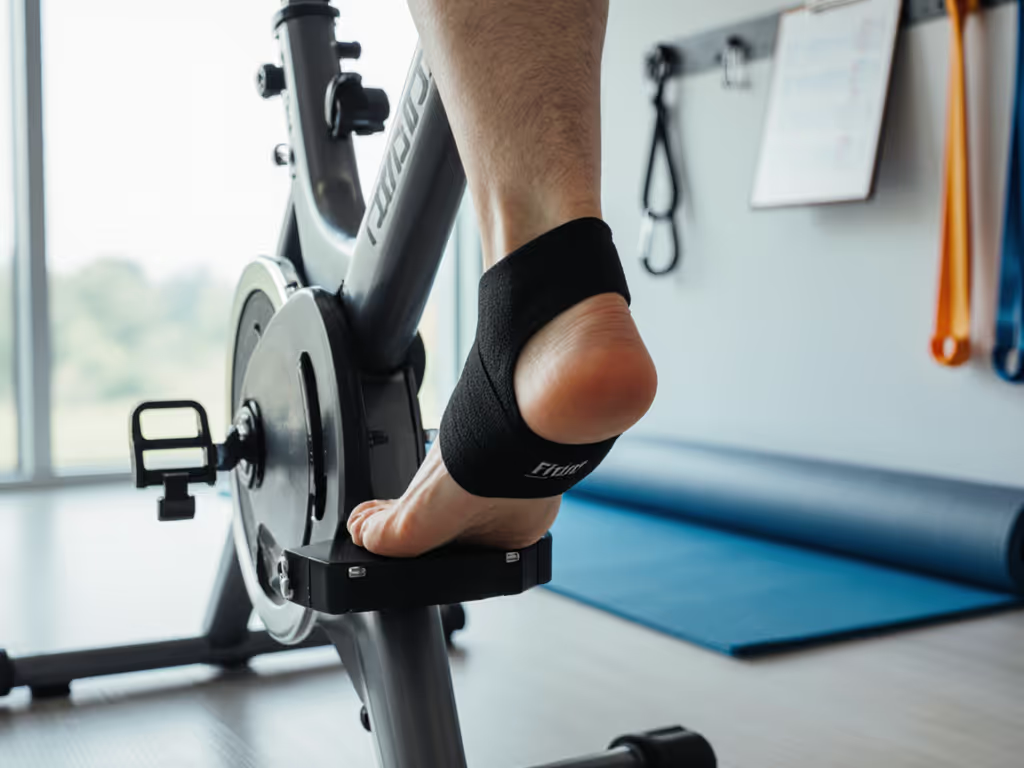
Understanding Ankle Rehab on an Exercise Bike
Exercise bike ankle rehabilitation has become a cornerstone of lower-limb recovery protocols because stationary cycling offers a controlled, low-impact environment where ankle mobility and strength can improve systematically[8]. The core advantage lies in precision: you regulate resistance, cadence, and duration independently, eliminating the shock loading that higher-impact modalities impose[6]. When rehabilitation hinges on measurable progress rather than feel, the data discipline matters.
Cycling after ankle injury works because the pedal cycle removes most gravitational stress while allowing progressive neuromuscular work[1]. The ankle stabilizers, particularly the tibialis anterior and peroneus longus, can activate and co-activate in real time, without the ballistic demand of weight-bearing drills that early phase patients cannot tolerate[1][3].
For apartment dwellers and multi-user households, stationary cycling offers another layer of pragmatism: no bouncing, no floor vibration, and predictable mechanical noise if the bike is chosen with spec discipline. That matters when your recovery routine cannot disrupt the household rhythm. For noise control, layout, and accessory placement that keep rehab sessions discreet, see our quiet home bike setup guide.
What Are the Rehabilitation Phases?
Phase I: 0-4 Weeks (Non-Weight Bearing to Partial Weight Bearing)
Immediately post-surgery or after acute ankle sprain, your clinician typically mandates non-weight bearing or transition to weight bearing status[3]. This phase prioritizes range of motion restoration and swelling control without ankle strengthening[2].
On the exercise bike:
- Begin pedaling with minimal resistance after clearance from your physical therapist, typically 10 minutes per session at low RPM, 4-5 days per week[2].
- Adjust seat height so the ankle remains in a neutral to slightly plantarflexed position (toes pointing slightly downward). For a step-by-step walkthrough of safe posture, seat height, and common setup mistakes to avoid, read our exercise bike setup guide. Pain is a stop signal; zero-pain pedaling is the threshold[6].
- Gradually increase session time by 5 minutes per week, monitoring for swelling afterward[2].
- Core and hip engagement off the bike (floor-based exercises, hip flexor work) prevents compensatory patterns that propagate into the ankle during weight-bearing phases[3].
Phase II: 4-8 Weeks (Progressive Weight Bearing and Strength Activation)
Once full weight-bearing is permitted, stationary bike protocols escalate resistance and introduce cadence variability. This phase aims to normalize gait neuromechanics and rebuild ankle joint stability through muscle co-activation[1].
On the exercise bike:
- Increase resistance incrementally so that tibialis anterior and peroneus longus activate synergistically (not just concentrically, but with co-contraction during the opposing portions of the pedal stroke)[1].
- A 6-week remodeled pedal training intervention in published research demonstrated significant improvement in hamstring activation, tibialis anterior and peroneus longus co-contraction, and ankle eversion angle during propulsion[1].
- Cadence range: 80-100 RPM at moderate resistance provides balanced recruitment without excessive joint stress[1]. If you're dialing in RPM for specific outcomes, our optimal cycling cadence guide explains how different ranges affect muscle recruitment and efficiency.
- Session duration: 20-30 minutes, 3-4 times per week. The bike's stable frame and pedal platform should eliminate wobble; any vibration indicates a setup problem or equipment failure, not normal operation.
Phase III: 8-12 Weeks (Functional Capacity and Return to Activity)
Once ankle and knee stability normalize through co-contraction protocols, the bike becomes a tool for building aerobic tolerance and testing load tolerance before sport-specific work resumes[3].
- Higher resistance, variable cadence, and longer duration sessions simulate sports-relevant demand without lateral or rotational stress[3].
- Concurrent floor-based balance work (single-leg stands, lateral lunges) prevents over-reliance on the bike and trains proprioceptive control[5].
- Target 40-50 minutes per session, 3-4 times per week, on a bike that maintains cadence and resistance accuracy within ±2% tolerance[1]. Drift in either metric masks progress and muddies the decision to advance.
Why Does the Equipment Matter?
An exercise bike for ankle rehab is not merely a platform; it is a test instrument. Accuracy determines whether your neuromuscular gains are real or an artifact of inconsistent input.
Power accuracy safeguards progressive overload. If the bike's power meter drifts 5-10% over six weeks, you cannot distinguish true adaptation from measurement drift. Calibration drift often goes unnoticed until weeks in, by which point months of protocol adherence may be based on false feedback[1].
Cadence stability ensures reproducible muscle activation patterns. A pedal rate that creeps upward during steady state intervals (due to console lag or erratic resistance response) introduces uncontrolled variability into muscle co-contraction sequences. For rehab, uncontrolled variability erodes protocol integrity.
Noise and vibration direct a fundamental question: can you sustain consistent training without disturbing others? Thin apartment walls and shared floors were my earliest motivation to map noise versus cadence and swap out hardware until the decibel graph flattened. That precision over persuasion ethos applies here: if the bike produces 75 dB at 90 RPM and your household constraint is 65 dB, no amount of marketing copy changes the physics. Protocol adherence depends on households accepting the noise floor. Open beats closed when bikes publish actual decibel data or allow integration with quieter, third-party pedal systems rather than forcing a vendor's ecosystem.
Data export ensures continuity if you transition care providers or want historical tracking across apps. Local data storage and reliable export to standard formats (CSV, FIT, TCX) mean your six-week dataset belongs to you, not locked in a proprietary cloud.
Monitoring and Adjusting Your Protocol
Reliable feedback loops make protocol adherence possible. Track the following metrics weekly:
- Resistance level at which you can maintain 90 RPM for 15 minutes without pain or swelling spike afterward.
- Peak cadence tolerance: the highest sustainable RPM before form breaks down or ankle instability emerges.
- Session duration: progression in 5-minute increments per week is conservative but data-driven; do not rush[2].
- Off-bike stability tests: single-leg stance duration, lateral lunge depth, gait smoothness during a 50-meter walk. These bridge the gap between bike fitness and functional capacity[5].
If progress plateaus or swelling increases post-session, revert to the previous week's parameters and extend that phase by 7-10 days. Protocol regression is not failure; it is data-driven adjustment[6].
The Quiet, Accurate Path Forward
Ankle rehabilitation on a stationary exercise bike succeeds when three conditions align: a clear, phase-based progression[1][3], accurate and stable equipment that reports power and cadence without drift, and household-compatible noise and vibration so adherence does not hinge on disturbing others.
Six weeks of consistent, measured pedal training can meaningfully improve ankle joint stability and gait mechanics[1]. The pedal's smooth arc, the bike's fixed geometry, and the absence of impact loading make it uniquely suited to this work. But the gains are only as reliable as the data; if it is not quiet and accurate, the protocol cannot be verified or iterated with confidence.
Consult your physical therapist or orthopedic clinician before starting any bike-based ankle rehab program, especially if you are less than 4-6 weeks post-surgery or if you have chronic ankle instability[1][3][6]. Your individual anatomy, surgical approach, and tissue healing rate dictate phase timing and intensity; these protocols are templates, not prescriptions.
Further Exploration
If you want to deepen your ankle rehab practice, explore complementary modalities: resistance band work for tibialis anterior and peroneus longus isolation, proprioceptive balance training off the bike, and gait retraining if walking patterns still show compensation[5][7]. Many facilities offer physical therapy-led bike sessions where a clinician can adjust seat geometry and pedal mechanics in real time, catching postural drift that at-home riders miss. If you are managing multiple users on one bike (say, a partner also recovering from an ankle setback), invest time in micro-adjustments (seat height, crank arm length, pedal float) so the bike's geometry suits each user without recalibration friction. If your household shares one bike, our family-friendly smart bike guide highlights models with rapid adjustments and safe profiles for different ages. Data-driven rehab scales best when the platform is flexible enough to accommodate variance without sacrifice to accuracy.
Related Articles