Shift Worker Exercise Bike: Circadian-Friendly Timing
By Diego Santos • 17th Jan
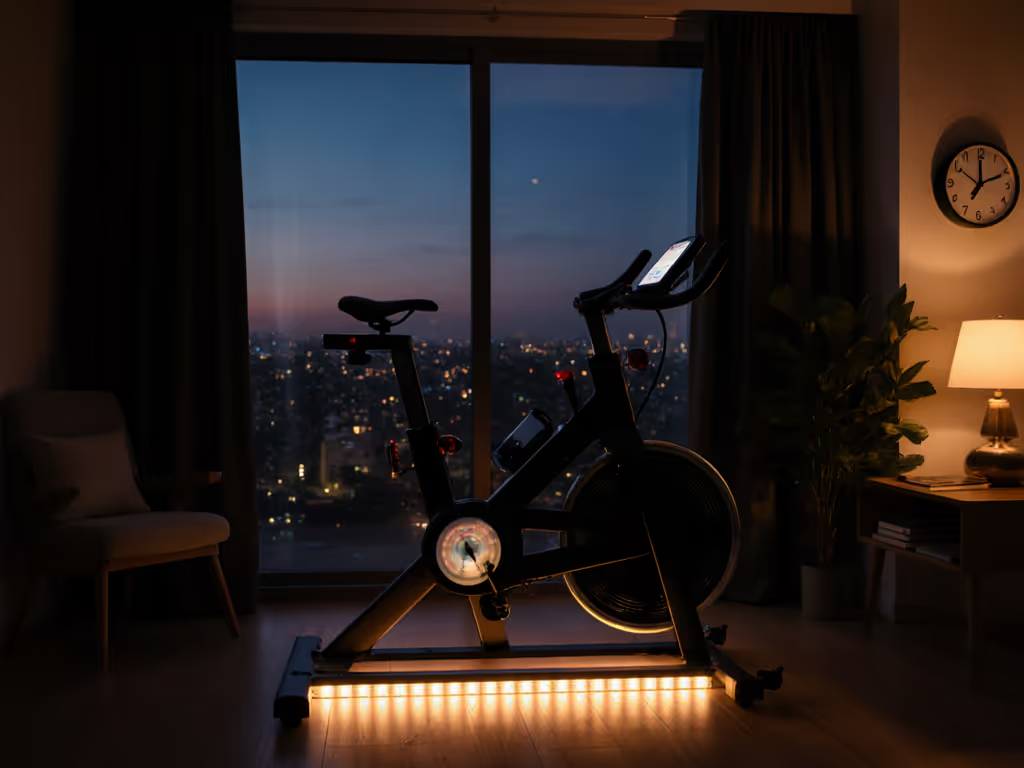
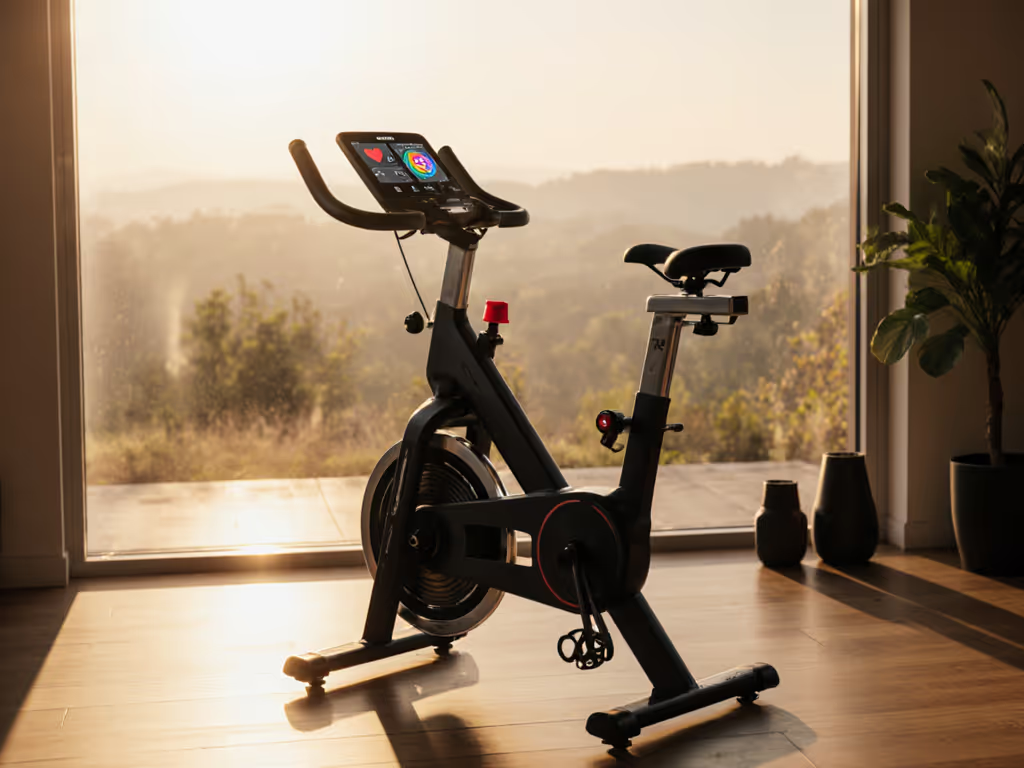
For many shift workers, finding exercise that actually fits your life, not disrupts it, feels impossible. An exercise bike for shift workers shouldn't just track watts; it should help you navigate the chaos of rotating schedules while honoring your body's natural rhythms. At its core, circadian rhythm cycling isn't about intensity; it's about timing your movement to align with your ever shifting internal clock. When your sleep cycle plays by different rules, your workout timing becomes your secret weapon for energy management and restful sleep.
Most fitness advice assumes a 9 to 5 existence. But when you're up at 3 AM or sleeping through the afternoon sun, standard workout advice backfires. The good news? Research shows even simple cycling sessions can significantly impact your circadian synchronization (if timed right). For the science behind how cycling supports sleep quality and steady energy, see our exercise bike health benefits guide. Let's explore how to make your indoor rides work with your unusual schedule, not against it.
Why does circadian timing matter more for shift workers?
Your circadian rhythm governs everything from alertness to digestion to recovery. For shift workers, this internal clock constantly battles against light exposure, social obligations, and work demands. When misaligned, you experience that "zombie mode," exhausted yet wired, unable to sleep deeply.
Studies confirm exercise acts as a powerful "zeitgeber" (time-giver) for your circadian system, second only to light itself. Unlike desk workers, shift employees can strategically use cycling sessions to nudge their body clock toward better alignment. The key insight? Timing matters more than duration when you're working against natural daylight patterns.
Quiet setup, quiet mind. This isn't just about sound levels, it's about creating exercise rhythms that support your mental clarity without disrupting household harmony.
What's the optimal timing for my exercise bike sessions?
The answer depends on your specific shift pattern:
For night shift workers:
- Pre-shift: Avoid intense cycling 2-3 hours before starting work, it can interfere with your "wind-down" phase after work
- Post-shift: Wait 60-90 minutes after finishing work before riding. This lets your body begin transitioning toward sleep mode
- Ideal window: Light cycling during your commute home (if safe) or 2-3 hours before your intended bedtime
For rotating shift workers:
- Anchor your cycling sessions to consistent biological markers rather than clock time
- Example: Ride 2 hours after your first caffeine intake regardless of shift
- Prioritize consistency in sequence (e.g., coffee → 30-min ride → meal) rather than strict timing
For early-morning shift workers:
- Morning light exposure combined with cycling creates powerful circadian reinforcement
- Try 20 minutes of moderate cycling within 30 minutes of waking
- This combination helps cement your "day" phase even if you work overnight shifts occasionally
Remember: The closer your exercise occurs to your body's natural temperature minimum (typically 2-3 hours before waking), the more it can shift your circadian phase. For night workers, this means carefully timed sessions can actually help you adapt to non-traditional schedules.
How can I exercise without disturbing others in my small space?
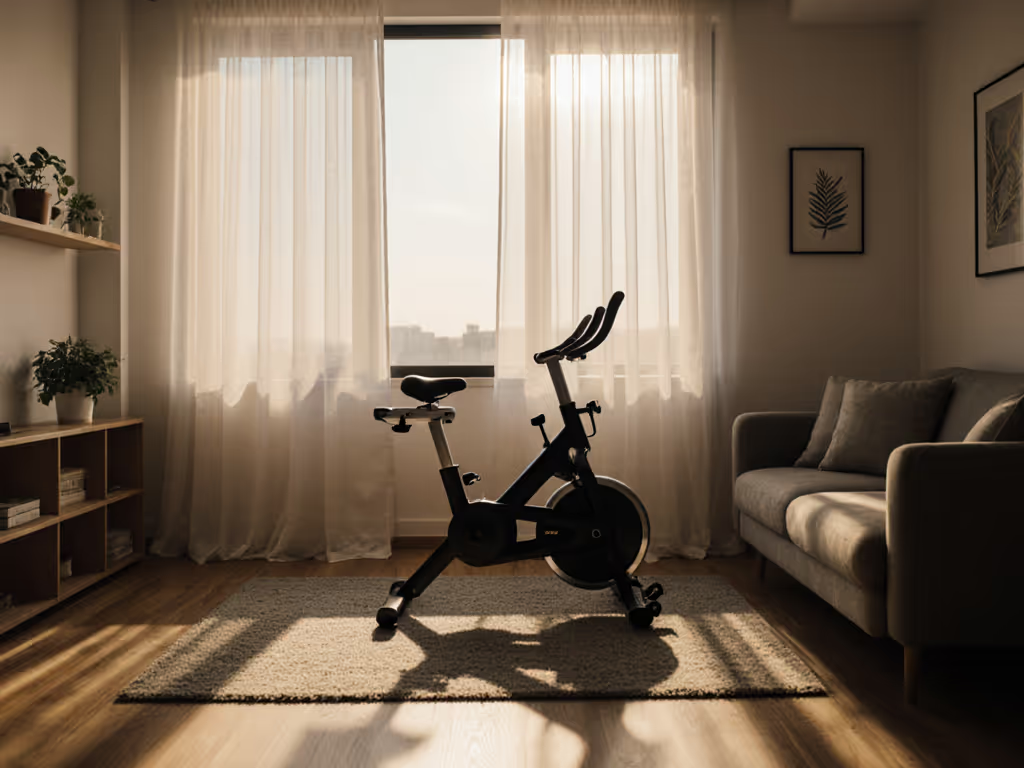
This is where many shift workers give up, but it doesn't need to be this hard. Get practical tips in our quiet home bike setup guide. Your apartment-friendly solution requires just three quiet habits:
-
The 5-Minute Setup Rule: Keep your exercise bike ready to ride without assembly. No hunting for resistance knobs or unfolding frames. Your frictionless path to movement starts with eliminating setup decisions.
-
Vibration Control: Place your bike on a dense rubber mat (not thin foam) that extends beyond the footprint. Better yet, position it over floor joists if possible, this reduces transmission through subfloors.
-
Sound Buffering: Pair your bike with apps that don't require loud audio cues. Look for visual-only feedback options or use bone conduction headphones at low volume.
I once helped a nurse reset her routine after years of failed attempts. We skipped the expensive bundles, paired her basic bike with a tablet on silent, and set just three default workout lengths. No daily decisions, just hop on and go. Four weeks later, she'd built consistency without waking her toddler. Momentum thrives when setup friction disappears.
What simple protocols work for energy management?
Forget complex training plans. Shift workers need sleep cycle exercise protocols that deliver maximum circadian benefit with minimal time investment:
The 15-Minute Circadian Reset
- 5 minutes easy pedaling (50-60 RPM) upon waking for your "day"
- 5 minutes steady effort (moderate resistance, 70-80 RPM)
- 5 minutes cooldown with deep breathing
This micro-workout serves as both a physical and mental transition ritual between sleep and wakefulness. For built-in structure that adapts to odd hours, follow our 30-day exercise bike plan.
The Post-Shift Wind-Down
- 10 minutes of very light cycling (low resistance, 60-70 RPM)
- Focus on smooth, rhythmic breathing
- Pair with warm, non-caffeinated beverage afterward
This helps lower cortisol and signals your body that work is complete, critical for energy management for shift workers.
Start small, stay quiet, and compound the wins. Your first goal isn't fitness, it's building the habit of movement that actually fits your irregular life. Learn proven strategies to build cycling habits that stick even with rotating shifts.
How do I maintain consistency with changing schedules?
Exercise for irregular schedules demands flexibility with structure. Create these anchors:
- One fixed element per week: Choose one day (even if shift varies) for the same workout time/duration
- Two flexible slots: Identify "safe windows" that work across most schedules (e.g., "always 2 hours before bedtime")
- The emergency protocol: A single 10-minute session that works at any time without disrupting sleep
Track your circadian rhythm cycling efforts not by calories burned, but by how consistently you maintain your sleep-wake rhythm. Use simple tools like sleep diaries or free apps that track sleep regularity, not just duration.
Final thoughts: Your quiet path to rhythm
The most successful shift workers don't force 9 to 5 exercise routines into their unconventional lives. They design night shift workout timing strategies that honor their biological reality. Your exercise bike becomes powerful not through complexity, but through consistent, quiet integration into your unique rhythm.
When your movement aligns with your circadian needs, not fighting against them, you will notice subtle shifts: easier transitions between sleep and wake, steadier energy throughout shifts, and that precious deep rest that feels increasingly elusive.
Remember: Your goal isn't perfection. It's the quiet consistency of showing up for yourself, bike after bike, cycle after cycle. The best setup for your irregular schedule is the one you'll use quietly and often.
Want to explore more? Check our quiet cycling protocols guide for specific workout sequences tailored to common shift patterns, no subscriptions, just straightforward guidance you can implement tonight.
Related Articles