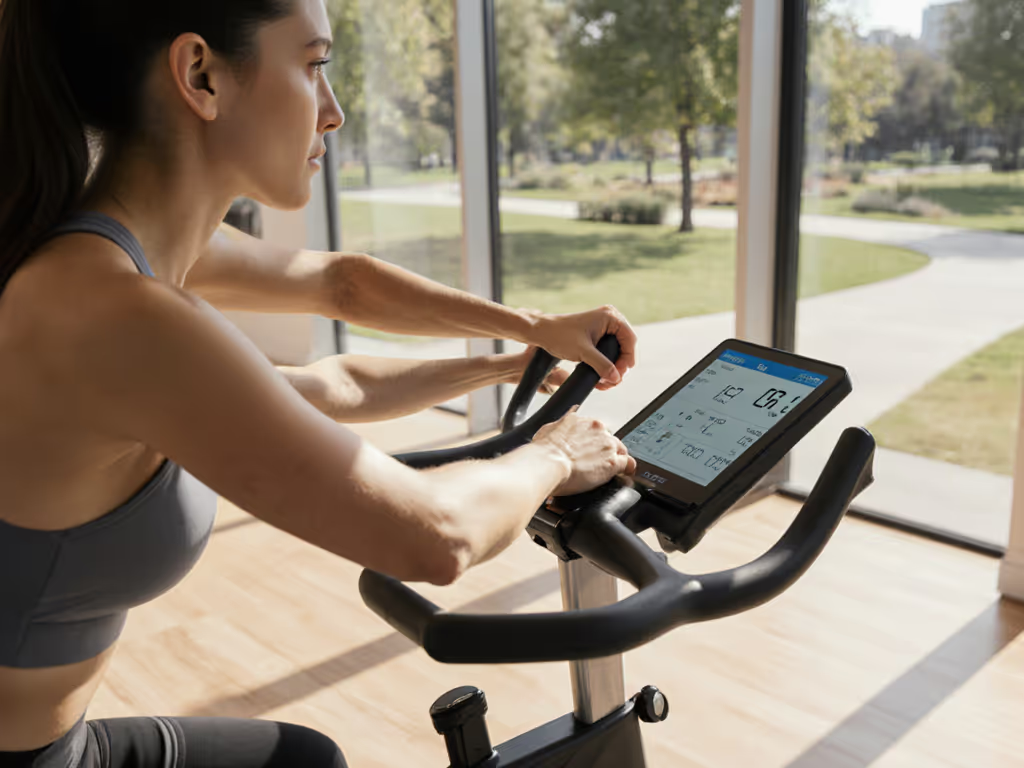
Exercise Bikes for Anxiety: Protocol & Breathing Guide
By Jordan Reyes • 4th Apr
What Does the Data Actually Say About Cycling and Anxiety?
Aerobic activity does correlate with reduced self-reported anxiety in observational studies. A 2023 meta-review found that moderate-intensity endurance work produced small-to-moderate anxiolytic effects in non-clinical populations, with benefits peaking around 20-45 minutes of work. Critically, the effect wasn't unique to cycling; walking, swimming, and running showed similar patterns. The mechanism appears to involve autonomic tone shifts, with increased parasympathetic activity post-exercise, rather than equipment specificity. For techniques that blend pedaling with mindfulness, see our mindful cycling for stress relief guide.
That said, intensity matters. High-intensity interval protocols show smaller anxiety reductions than steady, moderate work. If your goal is acute anxiety reduction, not performance gain, the bike's resistance profile and app ecosystem matter less than the ability to sustain low-to-moderate intensity without distraction. Loud, unpredictable resistance swings or a finicky Bluetooth connection will sabotage that.
This is where quiet precision becomes relevant: test, don't guess. A bike with stable magnetic resistance, low mechanical noise, and open connectivity (standard ANT+/FTMS) lets you layer a breathing cue app without friction. A bike locked into a single ecosystem or prone to cadence dropouts will fragment your attention precisely when you need it most. If noise or room layout adds stress, optimize your space with our quiet home bike setup guide.
How Should You Structure a Cycling Protocol for Acute Anxiety Management?
The literature suggests a straightforward threshold: target 60-70% of your estimated max heart rate, sustained for 20-40 minutes, 3-5 days per week. For a 40-year-old with no fitness baseline, that's roughly 108-126 bpm. The pace should feel controllable conversation — you can speak in short sentences, not sing.
Session architecture:
- Warm-up (5 min): Ramp cadence from 80 to 90 rpm. Keep resistance light. Focus on foot contact and leg rhythm.
- Steady block (25-35 min): Hold your target HR band. Cadence 90-100 rpm. Resistance stable, predictable.
- Cool-down (3-5 min): Ease back to 80 rpm, light resistance. Extend exhale during this phase (see breathing protocol below).
Key point: if the bike's resistance drifts, resistance requires constant manual tweaking, or the app cuts out mid-session, your nervous system stays in vigilance mode. Open-standard bikes with reliable BLE/ANT+ connectivity and smooth magnetic resistance profiles reduce that friction.
What's the Role of Breathing During Cycling?
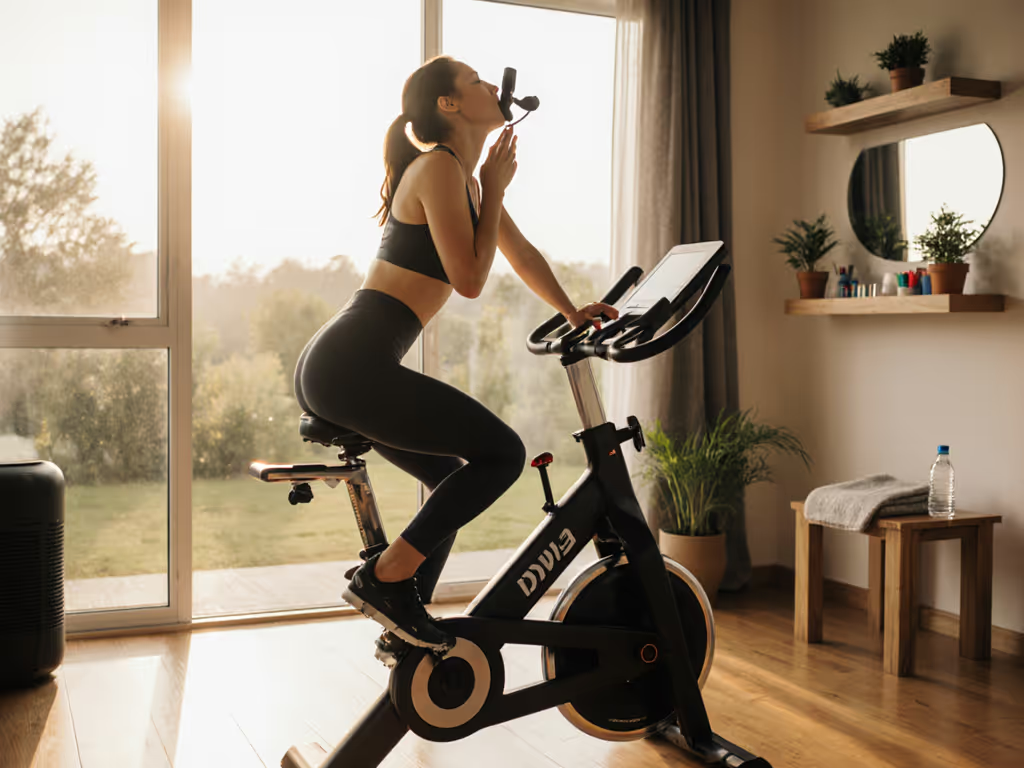
Breathing patterns modulate the autonomic nervous system. Slow, extended exhales activate the vagus nerve and favor parasympathetic tone (the calming branch). Faster or erratic breathing keeps you in sympathetic (fight-or-flight) territory.
Protocol:
- Breathe through your nose if comfortably possible; it slows airflow and extends transit time through the sinuses, naturally lengthening breath duration.
- Target a 1:2 inhale-to-exhale ratio. Inhale for 3-4 counts; exhale for 6-8 counts. Adjust based on exertion — this is guidance, not law.
- Begin this pattern in your cool-down phase (minutes 30-40). Your heart rate will already be dropping; the extended exhale amplifies that.
- Use a breathing-cue app (many are free, cross-platform, and don't require paid subscriptions) that pulses or chimes at your target exhale cadence. Pair it via Bluetooth to your bike's console if the bike supports open-standard audio routing. Proprietary, locked-down consoles often won't let you layer external audio cues.
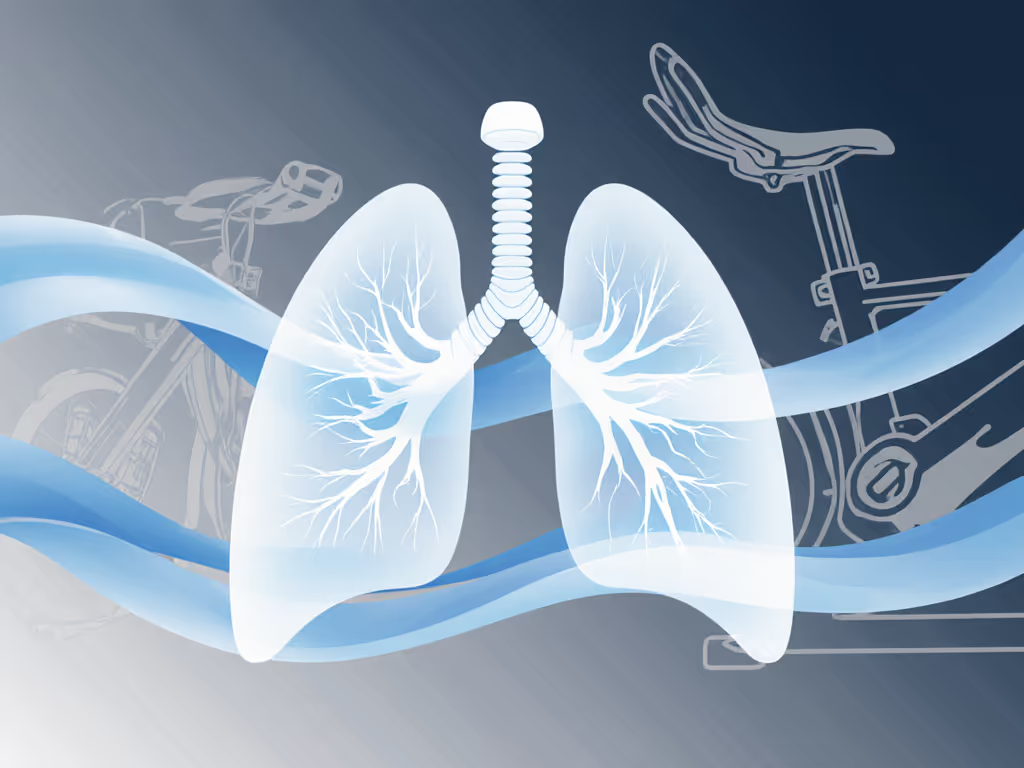
Empirical caveat: people feel better when given simple, structured cues. That's partly a real physiology effect and partly attention reallocation. Either way, the protocol works better if your environment doesn't fight you — quiet, consistent mechanical behavior from the bike, reliable connectivity, and no neighbor-complaint anxiety about noise. I learned that the hard way in a thin-walled apartment during intervals; swap the intensity protocol for a steady aerobic base and add proper decibel logging, and the whole household found peace. The data speaks: compliance rises when friction drops.
How Do You Know If a Protocol Is Working?
Measurement prevents wishful thinking. Log three data points:
- Resting heart rate (RHR): Take it each morning before standing, 3 consecutive days per week. A 3-5 bpm drop over 4-6 weeks suggests improved parasympathetic tone.
- Subjective anxiety score: Rate your baseline anxiety 0-10 on the day before starting the protocol and at week 2, 4, and 6. A 1-2 point drop is clinically meaningful.
- Compliance and drift: Log your actual session count versus planned. If you miss > 40% of sessions because the bike is loud, unstable, or app connectivity fails, the friction cost is real. Switch to a more reliable platform or dial back your plan to what you'll actually sustain.
This isn't to say you need a power meter or pro-level gear. A reliable HR chest strap ($30-60, often open-standard ANT+) and a basic notes app suffice. To ensure accurate readings, follow our heart rate calibration guide before you start tracking trends. But test actual sessions under real conditions. Marketing claims about anxiety don't survive apartment-floor noise realities.
What Bike Characteristics Support This Goal?
Since you're prioritizing steady-state anxiety reduction (not peak power or racing), the ideal bike has:
- Smooth, predictable resistance: Magnetic systems hold power bands without hunting or drift. Air and friction systems require constant micro-adjustment.
- Low mechanical noise: < 70 dB at 90 rpm, steady cadence. Test in a real home, not a showroom. Friction belts and loose bearings create cumulative noise that compounds stress.
- Open connectivity: BLE and ANT+ (not proprietary), so you can pair breathing apps, heart-rate monitors, and data platforms without vendor lock-in.
- Stable cadence feedback: Power and cadence should track within ±3% drift over a 30-minute session. Jitter breaks rhythm cues.
- Simple, offline-friendly interface: You don't need gamification or cloud-sync to manage anxiety. A straightforward resistor knob, a reliable wattage display, and a Bluetooth beacon are sufficient. If the bike requires an account, login, or internet to function at basic level, you've added friction to a session designed to reduce it.
Are There Limits to What Cycling Alone Can Do?
Yes. Cycling is an adjunct tool, not a replacement for therapy, medication, or clinical care. If you're experiencing panic attacks, persistent health anxiety, or symptoms that interfere with daily function, see a mental health professional first. Cycling can support that work (many therapists recommend it as a co-intervention), but it doesn't substitute.
Also: some people feel worse on bikes. Enclosed, repetitive motion can trigger claustrophobia or rumination for some individuals. If a protocol increases your anxiety after 2-3 sessions, stop and explore alternatives (running, rowing, swimming). Anxiety is heterogeneous; test your own response.
Next Steps: Building Your Own Protocol
If you're ready to experiment:
- Choose a bike with open-standard connectivity and low measured noise (not marketing-speak noise). This removes friction that undermines anxiety reduction.
- Start with 3 sessions per week, 25-30 minutes each, at 60-70% max HR. Log HR and subjective anxiety. Avoid intensity spikes.
- Layer breathing cues in your cool-down phase. Use a free, cross-platform breathing app. Pair via Bluetooth if possible.
- Track RHR and anxiety scores weekly. Look for a trend over 4-6 weeks, not daily noise.
- Adjust based on your data. If sessions feel forced or mechanical, reduce frequency or duration. Sustainability beats perfectionism.
For evidence-based strategies to stay consistent, check our cycling habit-building guide. The goal isn't to become an athlete; it's to build a quiet, measurable habit that shifts your baseline. If it's not quiet and accurate, it's not progress, and wasted effort on the wrong equipment will teach you that lesson fast. Test the protocol yourself. Document what works. Ignore the hype. That's where the real signal lives.
Related Articles