Exercise Bike Storytelling: Real Journey Documentation
By Diego Santos • 13th Jan
Documenting your indoor cycling journey shouldn't add another task to your already busy day. Yet authentic exercise bike content creation remains one of the most powerful tools for staying consistent with your fitness goals. When you approach fitness journey documentation as a natural extension of your ride (not an extra chore), you'll discover how these quiet moments of reflection compound into real, lasting change. I've seen too many people abandon their bikes because they felt pressured to create elaborate content that matched glossy marketing promises rather than their real apartment living reality.
Why does documenting my exercise bike journey matter when I'm short on time?
Your fitness transformation isn't just about physical changes. It is about the quiet wins that happen when no one's watching. When you live in a small space with thin walls or sleeping children, those early-morning rides where you didn't wake the household matter as much as the miles logged. Documenting these moments creates an accountability loop that works with your life, not against it.
Most people track either too much (creating digital clutter that adds stress) or too little (missing opportunities to recognize progress). The sweet spot is capturing just enough to notice patterns: how your quiet-hour strategy affects your sleep quality, or how consistent 20-minute rides beat sporadic 60-minute sessions when you're optimizing for real life. Tracking helps you see what actually works in your space (not what influencers claim works in theirs).
How can I document progress without disrupting my routine?
Defaults beat willpower. Make documentation frictionless by connecting it to existing habits:
- Pair with your cooldown: While your heart rate settles, jot one positive observation in your notes app.
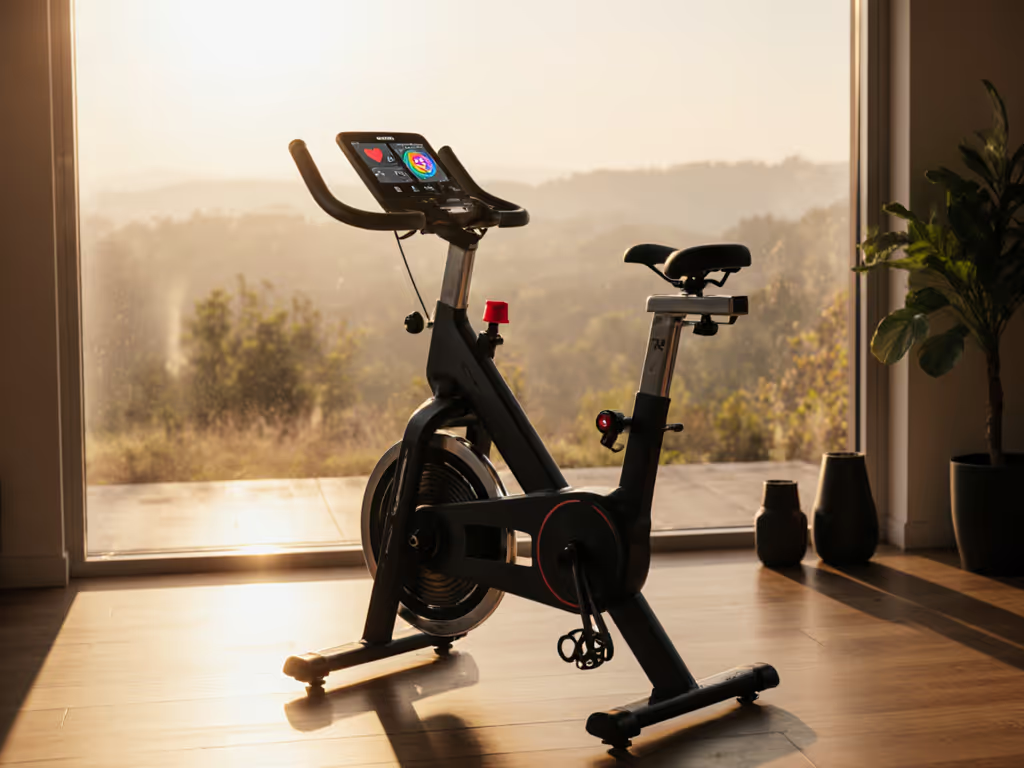
- Photo recap: Snap your bike in its spot after your ride (no staging needed) to visualize consistency.
- Voice memos: Record brief reflections during stretching ("Today's quiet 15-minute ride kept me sane before my 9 AM call").
These micro-documentation habits take seconds but build a rich archive of evidence that you're showing up (especially important when living in shared spaces where others might not notice your efforts). The neighbor I worked with didn't realize he'd completed 11 rides until we reviewed his simple photo log. That visual proof became his motivation to keep going.
Start small, stay quiet, and compound the wins.
What makes exercise bike storytelling authentic when everyone shares highlight reels?
Real exercise bike storytelling resonates because it includes the struggles confined to small spaces. Share how you:
- Found that sweet spot between volume and neighbor-friendliness.
- Problem-solved storage in your 10x10 ft apartment.
- Adjusted your schedule around family needs without guilt.
Your audience (which likely shares your thin walls and packed calendar) connects with practical solutions, not perfection. When you document how you actually ride (not how Instagram thinks you should), you create meaningful fitness transformation content that others can genuinely use. This isn't about becoming a fitness influencer; it's about sharing what works when your floor creaks with every pedal stroke.
How can I share social media exercise tips without creating pressure?
Quality trumps quantity when sharing social media exercise tips. Instead of daily posts, try these low-pressure approaches:
- Monthly "quiet wins" recap: "This month's highlights: Rode 3x before 6 AM without waking baby, finally found the right mat under my bike, tested 3 free apps and here's my verdict".
- One practical tip per platform: Share bike mat recommendations on Instagram, quiet-hour strategies on Twitter, space-saving hacks on Pinterest.
- Use existing touchpoints: Add a 10-second audio note about your ride experience when posting workout results to Strava. For low-cost community without lock-in, see our free social cycling apps comparison.
Remember, your goal isn't to become a content machine; it is to document what helps you stay consistent in your space so others in similar situations can benefit without adding to your cognitive load.
What's the simplest way to do cycling progress tracking in small living spaces?
Forget complicated spreadsheets. Real cycling progress tracking for apartment dwellers focuses on metrics that matter in constrained environments:
| Metric | Why It Matters | How to Track |
|---|---|---|
| Quiet ride count | Shows consistency without disturbing others | Calendar checkmark system |
| Pre-dawn rides | Indicates ability to ride before household wakes | Simple tally in notes app |
| App-agnostic sessions | Verifies you're not locked into one ecosystem | Log of which free apps you used |
| Space efficiency | Measures how well bike fits your living situation | Note when you successfully store it quickly |
This laser-focused approach respects your time while capturing what actually moves the needle for your specific situation. My quiet-hour strategy only worked because I tracked what truly mattered (not cookie-cutter metrics from generic fitness content).
How do I stay motivated when documenting feels like an extra chore?
Make your documentation work for you by designing it to require zero decisions. Set up these defaults:
- Automatic capture: Enable Apple Health or Google Fit to pull ride data from your preferred free app.
- One-tap logging: Create a shortcut that logs ride completion with a single tap.
- Voice trigger: "Hey Siri, I rode my bike quietly" to auto-log the session.
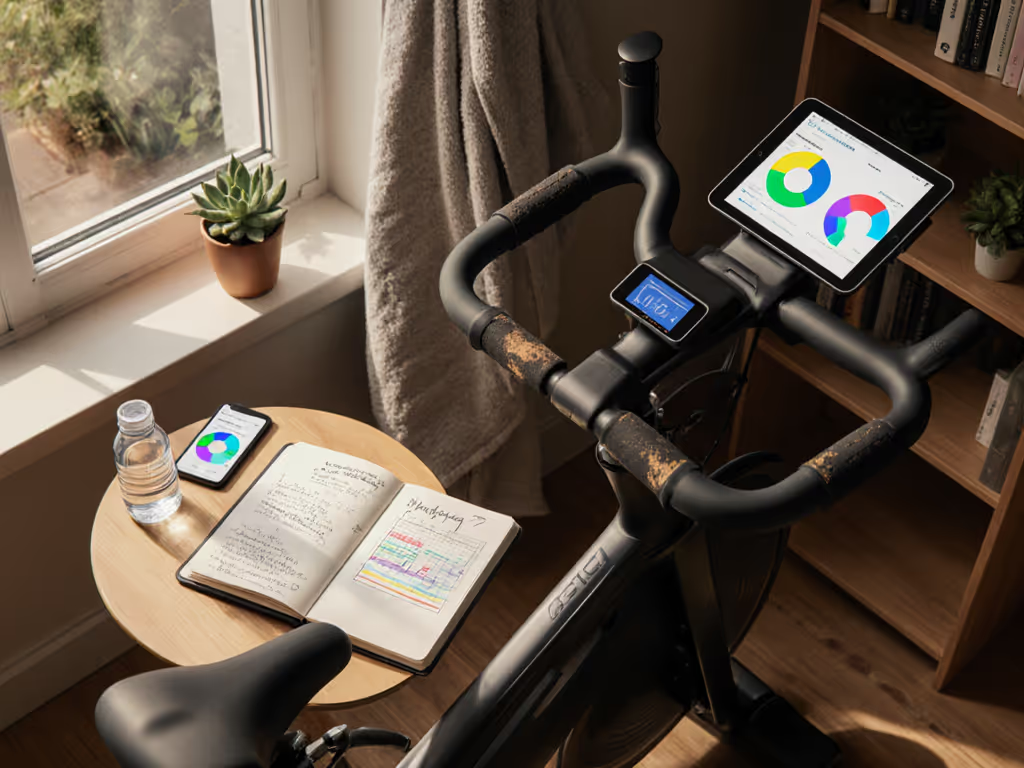
When I helped that neighbor finally get consistent, we eliminated all decision points: just three preset workouts, a tablet on a stand, and rubber pucks under the bike. No decisions, no drama. Four weeks later, he was documenting his rides without thinking about it. Momentum thrives when setup friction disappears.
Where should I share my fitness journey documentation for maximum impact?
Focus your energy where your community actually lives:
- Apartment living subreddits: Where noise concerns and space limitations are top priorities.
- Quiet fitness Facebook groups: Communities specifically for people in shared living situations.
- Privacy-focused platforms: Consider platforms that respect your data and won't monetize your journey.
Remember, your documentation's primary purpose is to serve your journey. Share outwardly only when it adds value to your experience (not because algorithms demand it). The most powerful transformation stories come from people who documented for themselves first and shared selectively based on genuine connection.
Your real estate isn't square footage: it is attention span. The best documentation systems respect both. When you stop chasing perfect content and start capturing authentic moments, your quiet consistency becomes the most compelling story of all. Keep your phone in airplane mode during rides if needed. Skip the hashtags. Just show up, ride quietly, and let your consistency speak louder than any curated post ever could.
Curious how others in similar living situations have documented their journeys? Seek out communities that value substance over spectacle. Your next breakthrough might come from someone who understands exactly what it's like to ride between the nursery and the kitchen.
Related Articles