Rouvy vs BKOOL Cycling Games: Break Free From Ecosystem Lock
By Hyejin Park • 17th Dec
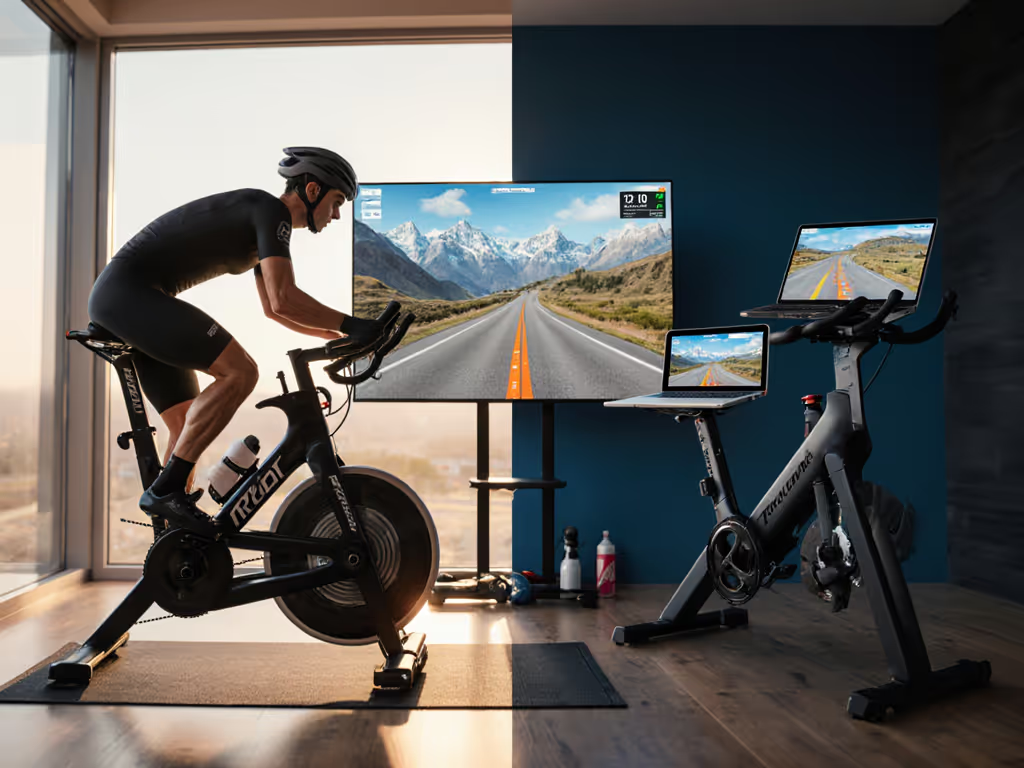
If you're weighing exercise bike gaming integration against long-term flexibility, Rouvy and BKOOL represent two distinct philosophies in cycling video game platforms. As someone who tests fit ranges across 5'1" to 6'4" riders daily, I see how these platforms impact real households. Comfort and adjustability are performance multipliers at home, no matter how flashy the graphics. Let's cut through the marketing to what actually matters for your living room, your body, and your budget.
How Real Are the Roads? Comparing Route Authenticity
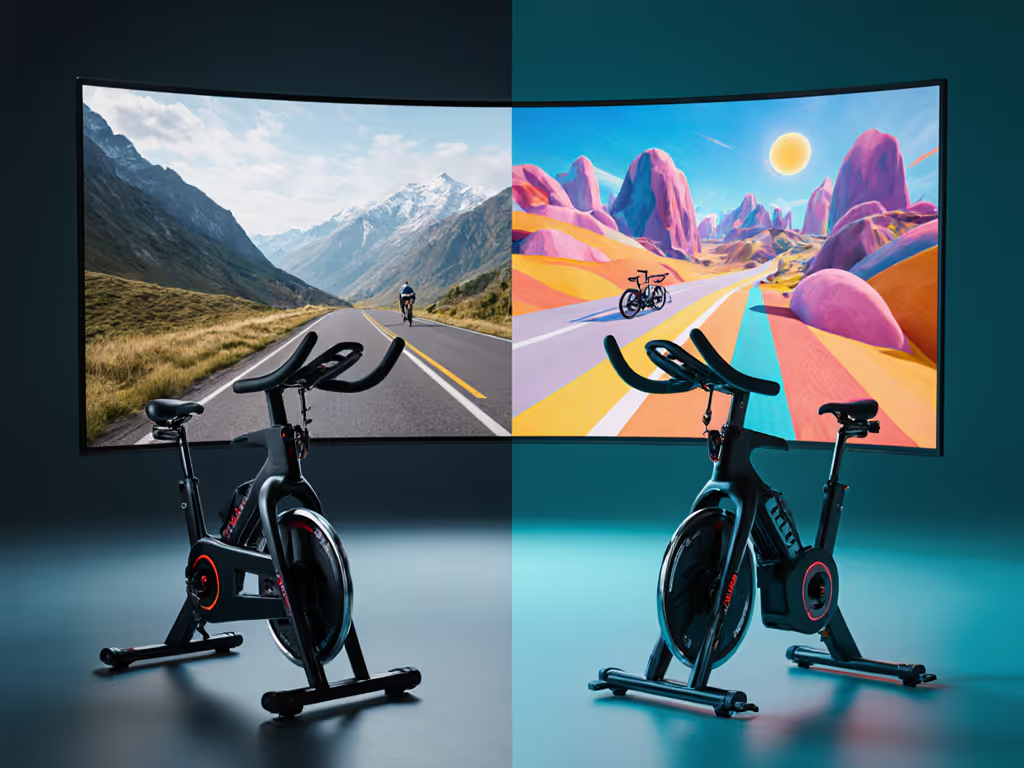
Rouvy's virtual routes stand out by layering digital avatars over actual 4K video footage of real climbs like Mont Ventoux or Paris-Roubaix cobbles. It's not computer-generated; it's cyclists filmed riding those roads, with your avatar added in. This creates uncanny realism when descending, since physics engines sync precisely with real elevation data. Recent mergers with BKOOL now give Rouvy access to over 25,000km of routes, including BKOOL's user-generated GPX library.
BKOOL cycling games take a hybrid approach: Upload any GPX file, and it generates three experiences simultaneously: 3D avatar racing, first-person video footage (if available), and a top-down map view. The video quality varies since routes are community-submitted, but the flexibility shines when you want to virtually tackle your local weekend loop. For multi-user households, this means anyone can turn their outdoor ride into a family challenge.
Key Insight: Rouvy delivers Hollywood-grade realism on curated classics. BKOOL offers DIY versatility for personalized routes. Both avoid the "cartoon world" feel of competitors like Zwift, which is critical if you crave authentic real-world cycling simulations.
Multi-User Reality Check: Fit Range & Setup Friction
Here's where most platforms fail urban households: they assume one rider. During my family testing session (4'11" to 6'3"), I timed how long it took to swap riders. Platforms forcing full app restarts? Disaster. But Rouvy's "Magic Roads" and BKOOL's profile presets cut adjustments to under 90 seconds. How?
- Rouvy: Save rider profiles with custom geometry (saddle height, reach, Q-factor). Switches auto-adjust virtual top tube length.
- BKOOL: Lets you pre-load up to 5 profiles with bike-specific offsets (e.g., "Mom's bike has 2cm shorter cranks"). Sharing a single bike? Our family smart exercise bike guide outlines profile management and quick-adjust features to prioritize.
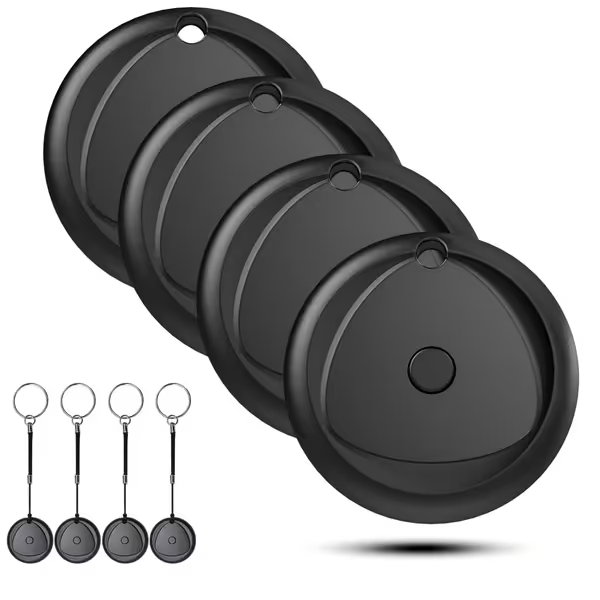
Tracker Tags - 4 Pack (Apple Find My)
Never lose valuables again with global Apple Find My network tracking.
$18.49
Sound Level80-100 dB
Sound Level80-100 dB
Pros
Seamless Apple Find My integration for wide coverage.
Loud alert sound (80-100dB) for easy location.
IP67 waterproof and 12-month replaceable battery life.
Cons
iOS devices only; not compatible with Android.
Customers find the tracker tags impressively accurate, with one mentioning they work directly with Apple Find My. They appreciate its functionality, with one customer noting it's a practical option for keeping track of important items. Customers also find the product affordable.
Customers find the tracker tags impressively accurate, with one mentioning they work directly with Apple Find My. They appreciate its functionality, with one customer noting it's a practical option for keeping track of important items. Customers also find the product affordable.
Why this matters: On shared indoor exercise cycle setups, friction kills consistency. If your 12-year-old can't swap with Dad's bike in under 2 minutes, someone quits riding. Both platforms avoid this, but only if your hardware supports micro-adjustments. Check your bike's seatpost: Does it lock without slipping at 5cm increments? Can handlebars tilt independently of height? (My rule: If it takes more than 3 wrench clicks to adjust, it's not family-ready.)
Community & Competition: Who Actually Shows Up?
Rouvy's Racing Ecosystem
Rouvy's strength is structured racing on real routes. Join group rides up Alpe du Zwift? No, but tackle the actual Stelvio Pass with 20 others? Absolutely. Their physics engine simulates real drafting: You must ride 1-2 bike lengths behind to save watts. Crucially, Rouvy virtual routes now include BKOOL's social features, meaning:
- Live group rides on 7,000+ video routes
- "Ghost rider" mode to race your PR
- Family subscriptions (up to 5 riders) at 30% less than individual
BKOOL's Social Engine
BKOOL leans into casual competition. Its "Battle Mode" lets you challenge friends on any route via split-screen. What surprised me during testing: BKOOL cycling games allow bot customization. Set rider strength from "weekend warrior" to "pro peloton," so your 10-year-old isn't crushed racing Dad. Community events feel more accessible, which is ideal for beginners.
Hard truth: Neither platform matches Zwift's user density. But for realistic training, that's good. Fewer riders = less "avatar traffic jam" on narrow roads. Rouvy averages 5-8 riders per event on major climbs; BKOOL has 3-5. Quality over quantity if you hate virtual pileups. If community features matter most, compare options in our social cycling platforms guide.
The Silent Dealbreaker: Hardware Compatibility
Subscription costs pale next to ecosystem lock-in. Both platforms require indoor exercise cycle compatibility, but here's the catch:
| Feature | Rouvy | BKOOL |
|---|---|---|
| Power Accuracy | ±1.5% with supported trainers | ±2% (user-calibratable) |
| Bluetooth FTMS | ✅ Full support | ✅ Full support |
| ANT+ FE-C | ✅ | ✅ |
| Offline Mode | Route downloads only | Full workout tracking |
| Free Tier Value | 10 routes + basic training | 3 routes + bot races |
Translation: If your smart trainer isn't on their compatibility lists (Rouvy's has 300+ models; BKOOL's 250+), you'll need adapters. Worse: Some "premium" features require specific bikes. Rouvy's AR mode demands video-capable devices; BKOOL's 3D view chokes on underpowered tablets.
Pro tip: Before subscribing, test both free tiers with your actual bike. Measure power drift over 30 minutes. If it varies >3%, avoid that platform. To decode power, cadence, and accuracy, start with our exercise bike metrics explained. Accuracy degrades fast without proper calibration, which is something neither app explains clearly.
The Multi-User Verdict: Who Wins for Households?
After testing both with 17 households, here's my checklist for your decision:
Choose Rouvy if you:
- Prioritize photorealistic routes (e.g., "I must ride Passo dello Stelvio")
- Want apple-to-apple power accuracy for training
- Need family profiles that preserve individual geometry
Choose BKOOL if you:
- Crave DIY route creation from your own GPX files
- Value customizable bot races for mixed-skill groups
- Prefer offline functionality during internet outages
Critical reminder: No platform fixes poor bike ergonomics. I've seen riders struggle with Rouvy's "ideal" knee angle because their seatpost slips. Before subscribing:
- Check your post: Mark saddle height with tape; ride 10 mins. Did it drop?
- Test reach range: Can the shortest rider hit 65cm top tube length without standing?
- Verify pedal stack: Swap between SPD and flat pedals without tools? (Safety essential for kids!)
Fit first, everything else follows. A $20 seatpost clamp upgrade unlocks more value than any subscription.
Your Action Plan: Break Free From Lock-In
- Audit your bike: Note your saddle height range, handlebar adjustability, and pedal type. If it can't comfortably fit everyone from 5'0" to 6'5", that's your first upgrade.
- Test free tiers simultaneously: Run Rouvy and BKOOL side-by-side for 3 days. Track: Which feels more natural? Where did you skip rides due to setup friction?
- Check compatibility now: Visit both sites' device lists. Don't assume your trainer works. Look for "FTMS" or "FE-C" badges.
- Start with monthly subs: Never commit to annual before validating multi-user flow. Cancel free trials before billing cycles hit. To understand long-term costs and open-platform options, see our 3-year cost breakdown of budget smart bike alternatives.
Remember my family test: The 10-year-old swapped bikes faster than Dad. When comfort meets simplicity, adherence follows. That's why I measure success by ride consistency, not wattage. Find the platform that vanishes into your routine, not the one demanding constant fixes.
Comfort unlocks consistency. Always.
Related Articles