Exercise Bike HRV Comparison: Accuracy & Recovery
By Marta Kowalska • 28th Apr
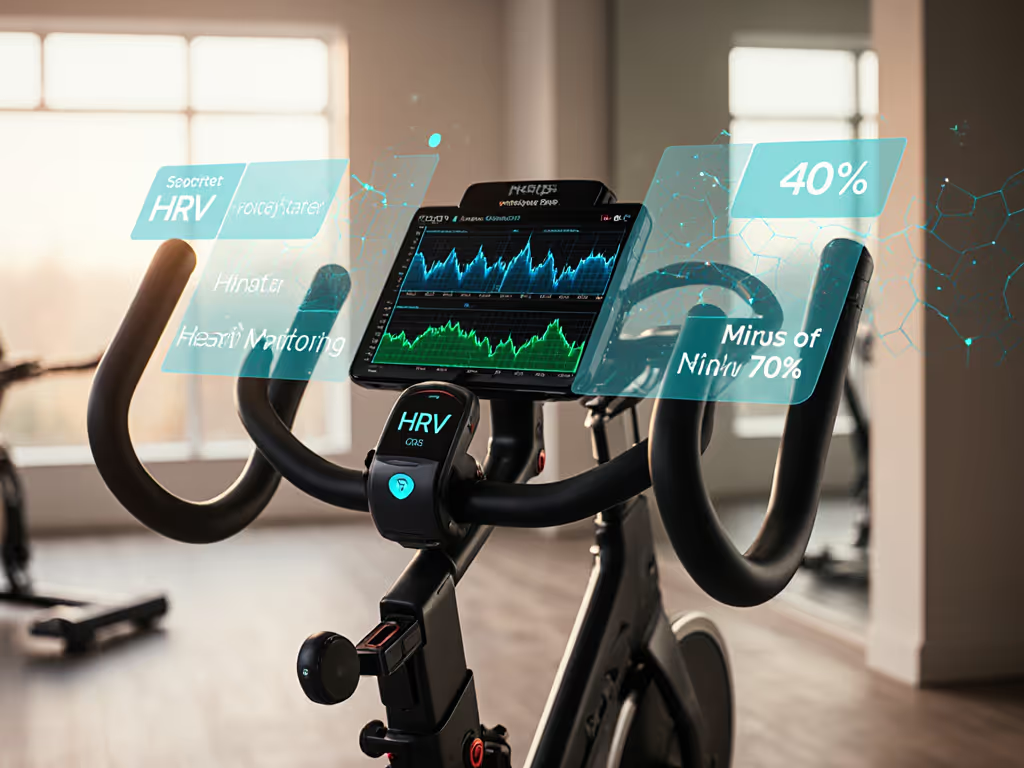
Exercise bike HRV comparison and heart rate variability monitoring bikes have emerged as key differentiators in the home fitness market, yet most riders remain uncertain about what HRV actually measures, whether their bike's sensors deliver reliable data, and how to integrate that information into evidence-based recovery decisions. This deep dive unpacks the science, compares real-world accuracy, and shows you how to evaluate HRV features without falling into marketing traps.
Understanding HRV: The Foundation
What is Heart Rate Variability and Why Does It Matter?
Heart rate variability (the microsecond-to-microsecond fluctuation in time between consecutive heartbeats) is a window into your autonomic nervous system (ANS). A higher HRV typically indicates a well-recovered, parasympathetic-dominant state; lower HRV suggests fatigue, stress, or inadequate recovery. For cyclists, HRV serves a pragmatic function: it reveals readiness before a workout and validates recovery efficacy after one.
Unlike static metrics (resting heart rate, max HR), HRV fluctuates moment to moment and responds quickly to training load, sleep quality, and stress. This responsiveness makes it compelling for biohacking exercise equipment integrations, yet it also makes HRV prone to noise if your sensor is unreliable.
How HRV Monitoring Works on Exercise Bikes
Most exercise bikes capture HRV through chest strap sensors (Bluetooth or ANT+ encoded) or optical sensors embedded in handlebar grips. To ensure clean RR intervals, follow our heart rate calibration guide. The bike's console or paired app detects these beat-to-beat intervals (RR intervals) and calculates metrics:
- RMSSD (root mean square of successive differences): the most common HRV metric, sensitive to parasympathetic tone.
- LF/HF ratio (low frequency to high frequency): attempts to separate sympathetic and parasympathetic contributions.
- Trend analysis: daily or weekly HRV patterns to spot drift before fatigue becomes acute.
The quality of these calculations depends entirely on sensor accuracy, signal clarity, and the algorithm's robustness. A drifting optical sensor or intermittent Bluetooth dropout will corrupt your data and render trends meaningless.
HRV Accuracy: What Research Shows
Sensor Reliability and Drift
Chest strap sensors (particularly medical-grade or validated models) achieve HRV accuracy within ±5% of laboratory equipment under controlled conditions. Handlebar and wrist-based optical sensors introduce greater variability, often drifting ±10-15% as ambient light, skin tone, and grip pressure shift. One factor confirmed by exercise physiology literature: motion artifact and sweat-induced signal loss worsen as intensity rises (precisely when HRV data could be most actionable for recovery planning).
For home riders, this means optical-only HRV integration demands methodical baseline testing. Record your HRV simultaneously on your bike's sensor and a validated external device (Oura ring, Polar H10 chest strap, or clinical ECG) during low-intensity sessions. If drift exceeds ±10-15%, the bike's HRV trend data is too noisy to guide training decisions reliably.
Interoperability and Data Integrity
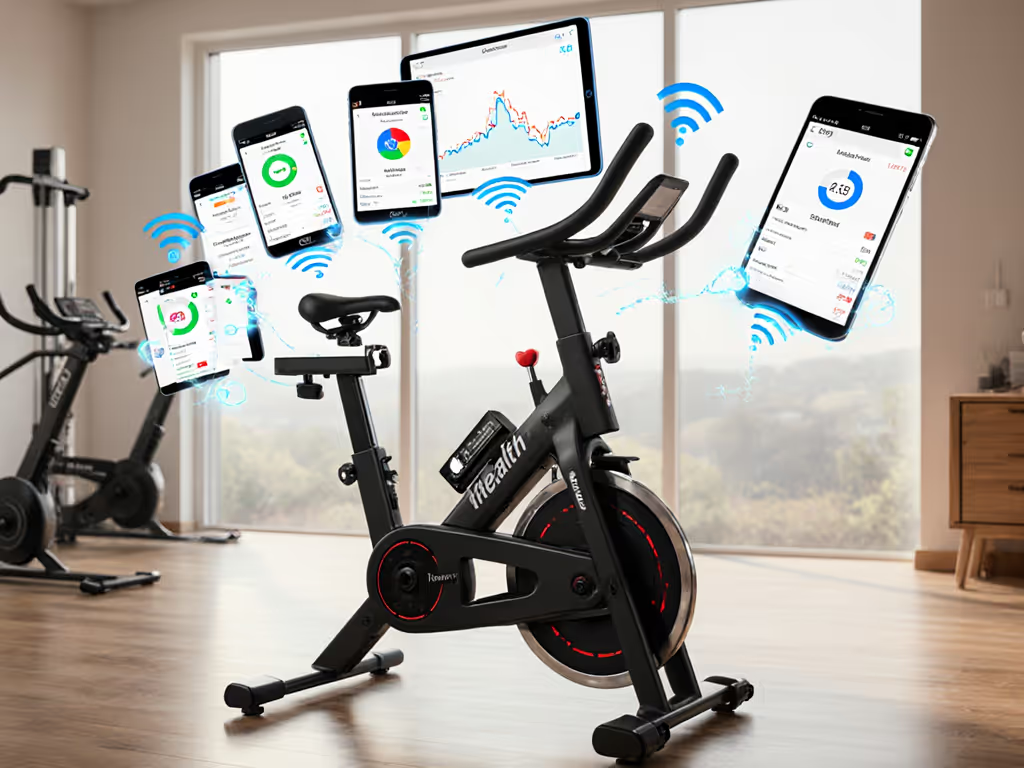
A critical pain point for your demographic: HRV data often lives in a proprietary app silo. If your bike's ecosystem doesn't export HRV to Apple Health, Garmin Connect, or Strava, you lose the ability to correlate exercise-derived HRV with sleep, stress, and other contextual metrics. Avoid data silos with our fitness API support guide. This fragmentation defeats the purpose of HRV monitoring.
When evaluating a bike, ask three questions:
- Can HRV data be exported as CSV or synced to third-party health platforms?
- Does the bike support standard Bluetooth FTMS (Fitness Machine Service) or ANT+ FE-C protocols, or are you locked into a proprietary connection?
- If the company's app sunset or the company pivots, can you still access your historical HRV?
Bikes that answer yes to all three preserve your autonomy over your data and give you a genuine recovery-monitoring system rather than a subscription trap.
Real-World Accuracy Testing
Methodology for Home Riders
Before committing to HRV-guided training, conduct a simple three-week test:
Week 1: Record morning HRV on both the bike's sensor and an external validated device (e.g., Polar H10 via its app) five days per week, each time immediately after waking, before standing or caffeine. Note sleep quality, stress level, and any unusual circumstances.
Week 2-3: Replicate the protocol. Calculate the correlation coefficient between the two HRV sources. A Pearson r above 0.85 suggests acceptable agreement; below 0.75 indicates too much noise for trend analysis.
If the bike's sensor fails this test, you've identified a hardware or calibration issue before committing your recovery strategy to that data.
The Autonomic Nervous System Monitoring Angle
Advanced riders increasingly use HRV as a proxy for ANS balance (high parasympathetic tone, reflected in elevated HRV, predicts faster recovery; sympathetic dominance, reflected in lower HRV, signals a need for active recovery or rest days). For day-after intensity planning, use these active recovery protocols when HRV trends point to sympathetic dominance. Bikes that allow you to tag workouts (easy, threshold, VO2 max) and log sleep and stress alongside HRV enable this correlative analysis.
However, a single HRV reading is noise; a 30-day trend is signal. This means your bike's app must support historical data visualization and export. If the app deletes old data after 90 days or charges a subscription to unlock history, you're buying a device, not a recovery tool.
Comparing Exercise Bikes on HRV Capabilities
Key Comparison Dimensions
| Dimension | Why It Matters | What to Look For |
|---|---|---|
| Sensor Type | Determines baseline accuracy and robustness during sweaty, intense sessions. | Chest strap recommended; handlebar optical requires validation testing. |
| Connectivity | Locks you in or sets you free. | Native Bluetooth FTMS + ANT+ FE-C; seamless third-party app syncing. |
| Data Export | Reclaim your data and correlate it with sleep, stress, and life context. | CSV export, Health/Garmin/Strava sync, local storage, no paywall. |
| Calibration & Drift Protection | Prevents day-to-day noise from corrupting your HRV trends. | Published calibration procedures; option to re-sync mid-session; documented drift specs. |
| Algorithm Transparency | Know what you're measuring. | Vendor documents RMSSD calculation, LF/HF methodology, and any filtering applied. |
| Offline Functionality | Ensures core HRV capture even if the vendor's cloud goes down. | Console stores HRV locally; sync happens when connection returns. |
Common Pitfalls to Avoid
Proprietary ANT+ without ANT+: Some bikes advertise "ANT+ compatible" but only support ANT+ input (e.g., to receive workouts from TrainingPeaks) while outputting HRV only to the vendor's app. This is a one-way street; your data remains siloed.
"AI-Powered" HRV Predictions: Marketing language often masks simple regression models. Real value lies in your own consistent baseline, not a vendor's one-size-fits-all algorithm. Treat predictive HRV claims with skepticism until you validate them against your own data.
Firmware-Dependent Accuracy: If HRV accuracy depends on cloud-side processing, a firmware update or app deprecation can silently corrupt your data pipeline. Prefer bikes where the console calculates HRV locally.
Recovery Metrics Integration: Beyond HRV
Why HRV Alone Isn't Enough
HRV is a powerful signal, but it's one voice in a chorus. Elite coaches triangulate HRV with power output, cadence stability (a proxy for neuromuscular fatigue), resting heart rate, and perceived effort. If you're new to these numbers, start with our exercise bike metrics explained primer. A bike's value multiplies if it captures and exports all four so you can build a composite recovery score.
This is where repairability and open standards intersect with performance: a bike using standard protocols (Bluetooth FTMS for power, ANT+ for cadence) lets you mix and match best-in-class sensors rather than settling for the bike's mediocre all-in-one bundle. Fix what fails, prevent what's next, and buy a modular system where you can upgrade the power meter or sensor independently of the frame.
Data Ownership and Privacy
Your psychographic profile values autonomy; HRV and ANS data are deeply personal. Ensure the bike's privacy policy doesn't claim ownership of your metrics or permit third-party sale. See how major brands handle your data in our exercise bike data privacy guide. Prefer bikes where data remains on-device by default and syncing is opt-in. Read the terms; if they're vague, email the company and document the response.
Practical Noise Considerations
HRV monitoring sometimes competes with another critical concern for your audience: noise. Early morning HRV readings are most accurate when you're rested, but that's also when your family or neighbors are most likely to be disturbed. A methodical approach:
- Test your bike's acoustic footprint during off-peak morning hours (weekday 6–7 AM).
- Record decibel levels at 3 meters (typical adjacent room distance) during a steady-state Z2 session.
- Cross-reference published claims; most bikes cite peak wattage noise, not steady-state during a typical HRV-capture session (which is usually low-intensity, thus quieter).
- Pair the bike with a sound-dampening mat and ensure the console's cooling fan isn't audible. A whirring electronic hum can corrupt optical HRV readings if it induces vibration.
Future Outlook: HRV and Wearable Integration
The trajectory is toward ecosystem convergence. Leading bikes now sync ANT+ and Bluetooth HRV to external wearables (Oura, Whoop, Apple Watch) rather than competing with them. This open-standard approach yields the most reliable recovery picture: HRV from your wearable (overnight baseline), HRV during exercise (on-bike capture), and power/cadence from the bike itself, all unified in Apple Health or Garmin.
When evaluating future generations, prioritize bikes that embrace this multi-source philosophy over those that insist you use their proprietary wearable or console exclusively.
Key Takeaways for Your Next Purchase
- Validate before trusting: Test HRV correlation between your bike and an external device before building a recovery program on bike-derived metrics.
- Demand interoperability: Non-negotiable for your use case. Bluetooth FTMS, ANT+ FE-C, third-party app syncing, and data export.
- Understand what you're buying: Ensure the bike calculates HRV locally and offline; avoid cloud-dependent accuracy.
- Check the warranty: A bike whose HRV sensor drifts within six months should be covered; clarify this upfront.
- Plan for maintenance: HRV accuracy and recovery metrics integration depend on clean sensors and stable mechanics. A methodical maintenance schedule (sweat-resistant coatings, belt tension checks, bearing inspection) protects both your investment and your data quality.
Moving Forward: Further Exploration
Dive deeper by reviewing peer-reviewed exercise physiology journals on HRV reliability in home equipment settings; consult independent testing labs (not vendor-funded) that benchmark sensor accuracy across brands; and join community forums where users share long-term HRV trend data and compare bikes under real-world conditions. Document your own baseline and track trends over months, because your personal data tells a truer story than any marketing claim. The best recovery tool is the one you'll use consistently and trust completely.
Related Articles