Under-Desk Bikes Under 40dB: Home Office Guide
By Marta Kowalska • 27th Mar
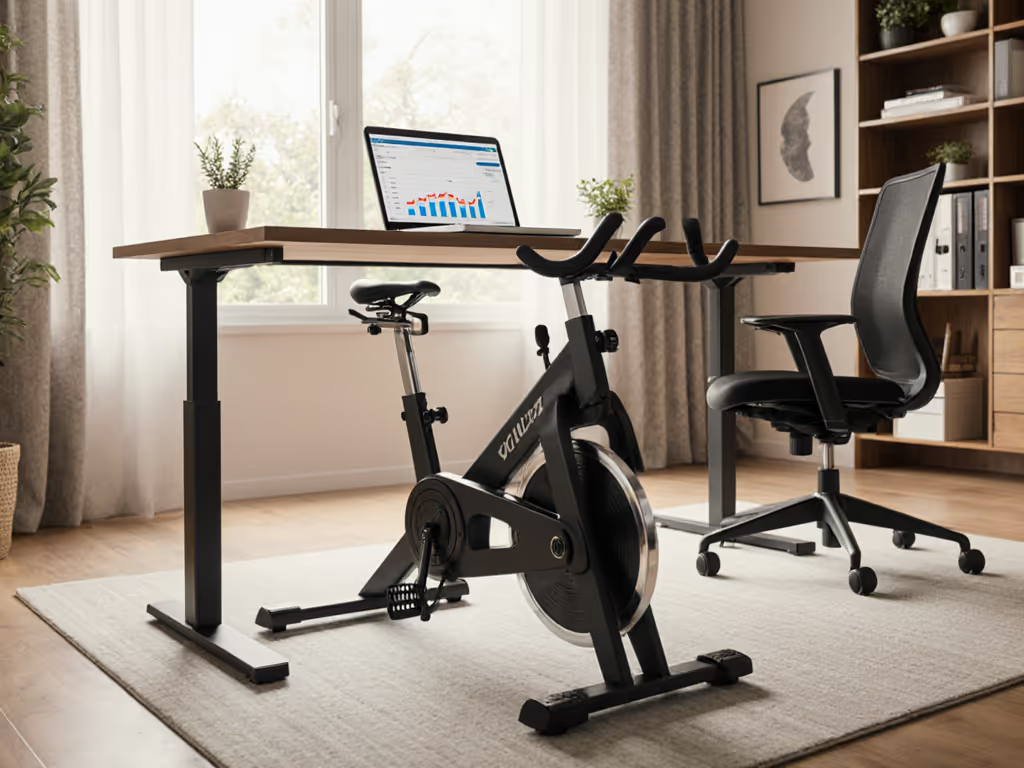
Ultra-quiet office exercise bikes are not marketing fiction, they're a technical category defined by measurable noise thresholds that separate functional silence from disruptive hum. If you work in a shared space, manage a household with sleeping children or light-sensitive partners, or simply refuse to trade health for home harmony, bikes certified under 40dB noise level matter more than any fitness app integration.
A quiet office baseline sits at approximately 40 dB; normal conversation occurs around 60 dB. Under-desk bikes in the sub-40dB band operate at near-silence (comparable to a whisper or library ambiance), whereas machines in the 50-65 dB range produce a noticeable hum that compounds over an hour of pedaling. The difference is not abstract: it's the difference between riding while colleagues take calls and riding while you mute yourself for every meeting.
This guide cuts through vendor marketing claims to examine exactly which home fitness exercise equipment meets real-world noise standards, which drive systems deliver verifiable quietness, and which models respect your right to serviceability and parts access (not planned obsolescence). Check our under-desk picks under 45 dB for office-tested options.
Why 40dB Matters: A Data-Driven Noise Baseline
Declaring noise specifications without context is how manufacturers hide mediocrity. A manufacturer might claim "whisper-quiet" while shipping a 58 dB machine. The key is verification: third-party testing, not just brand assertions.
The ideal under-desk bike operates at near-silent levels with verified noise measurement. Below 40 dB, you cross into acoustic invisibility: your own breathing and pedal cadence become the dominant soundscape, not the drivetrain. Above that threshold, especially approaching 55-65 dB, you'll hear a continuous hum, whine, or friction noise that accumulates fatigue over long sessions.
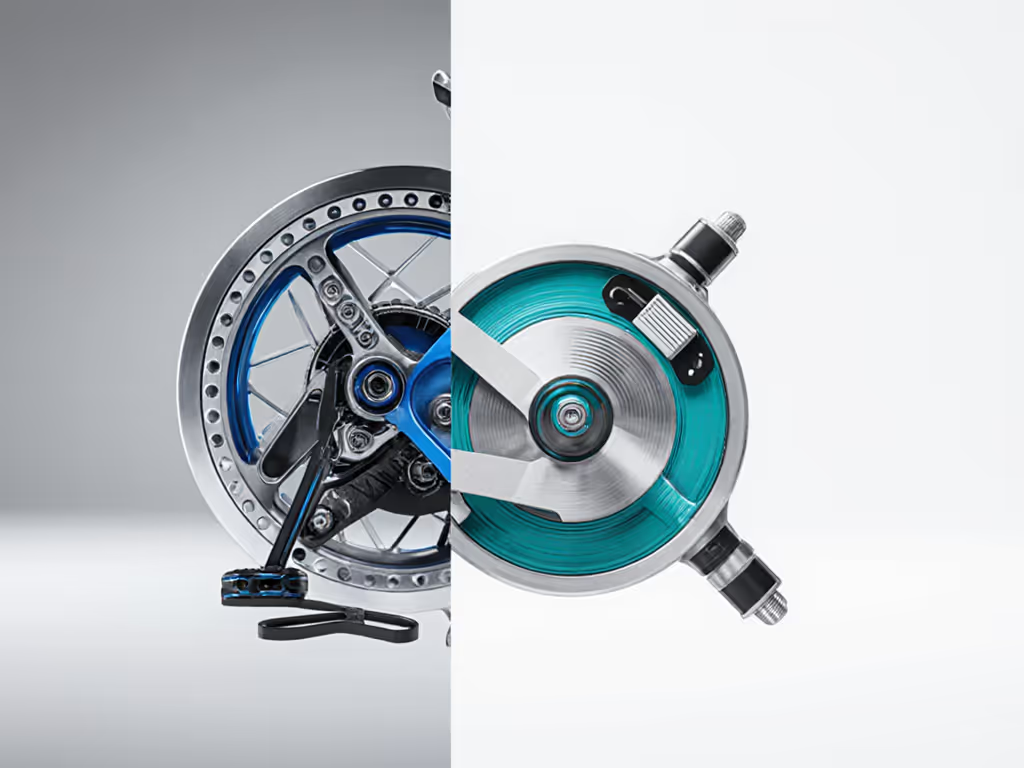
Drive system determines noise profile more than any other variable. Belt-drive systems provide a quiet, fluid ride at lower resistance levels compared to chain or friction drives. Magnetic resistance construction makes for whisper-quiet operation, especially compared to spring or pad-based systems. Conversely, chain drives and friction flywheel setups introduce friction noise and require maintenance tensioning to stay quiet, and often fail to deliver sub-40dB performance at all.
Standard fasteners save futures, and so does a simple belt you can actually service yourself without proprietary tools.
You'll notice that entry-level machines often omit noise data entirely in their spec sheets. That silence from the vendor is its own signal: they have no certified benchmark to hide behind. Productivity-focused cycling demands transparency.
Step 1: Establish Your Noise Baseline and Real-World Constraints
Before evaluating any machine, document your actual environment and use case:
- Ambient sound at your desk: Use a phone decibel meter app during typical working hours. Note the baseline at 8 a.m., noon, and 5 p.m. If your office is already 50+ dB (light traffic, open plan), a 45 dB bike might not create noticeable impact. If it's 35 dB or lower (quiet home office, sleeping household), anything above 40 dB will be audible.
- Your pedaling schedule: Morning rush equals higher noise sensitivity from sleeping residents. Evening equals competing with TV, kitchen activity, or calls. Document when you'd actually ride.
- Flooring and isolation: Hardwood amplifies vibration; carpet dampens it. Apartment floors transmit low-frequency rumble to neighbors below. Concrete basements isolate better. A 40 dB machine on hardwood over an apartment floor can feel louder to downstairs neighbors due to vibration transmission.
- Listener profiles: Are you hiding from a light sleeper, a partner on calls, or a baby? Noise sensitivity varies by age and sleep state.
Critical skepticism first: Noise claims from marketers assume you're testing in a lab, not in your actual bedroom or shared office. Real-world noise includes vibration, resonance through furniture, and the subtle frequencies your ear catches at 6 a.m. that you'd never hear at 2 p.m.
Step 2: Evaluate Drive Systems and Resistance Mechanisms
This is where repairability and long-term quiet operation intersect. A quiet bike today doesn't guarantee quiet operation in year three without proper maintenance and standard parts availability.
Belt-Drive Systems
Belt-drive bikes deliver smooth, fluid operation with inherently low friction noise. The trade-off is precision: belt tension requires periodic adjustment (typically every 50-100 hours of use, depending on design). Quality belt-drive designs use industry-standard pitch and width (Gates or similar commercial specs), so replacement belts cost $30-60 and are sourced from industrial suppliers, not proprietary distributors.
Yosuda Under Desk Bike Pro employs a belt-drive system providing a quiet, fluid ride at lower resistance levels. Its under-18-pound frame, 10-15 minute assembly, and standard pedal interface make it accessible for multi-user households and renters, no permanent installation required.
The risk: cheap belt-drive bikes use non-standard belt profiles, meaning you'll pay $150+ for a proprietary replacement when the original wears. Productivity-focused cycling equipment should use standard fasteners and standard drive components. Before purchasing, verify the belt pitch (5M, 8M, 14M) and width; match it against commercial suppliers. If the spec isn't published, that's a red flag.
Magnetic Resistance
Magnetic resistance avoids friction entirely, the pedal moves through an electromagnetic field with no contact. This mechanism is mechanically quieter than belt or chain, with zero wear patterns (no adjustment needed). The catch: magnetic systems require steady electrical power (either battery or line). If the system fails, you'll need electronic repair or replacement; there's no purely mechanical fallback.
Models with magnetic resistance offer one of the smoothest strides and whisper-quiet operation, especially in shared office environments. Magnetic systems also sidestep the belt-tension maintenance cycle, making them lower-friction for casual users.
The repairability concern: magnetic consoles and controllers are proprietary. If the resistance firmware drifts or the controller dies, expect a $200-400 repair or replacement through the manufacturer. Compare this to a belt system where you can replace the drive mechanism for $80-150 with standard parts and basic wrenching.
Step 3: Cross-Reference Noise Specs with Independent Testing
This is non-negotiable: use vendor specs as a starting point, then find independent reviewers who measure decibels in controlled environments.
The DeskCycle is described as smooth and quiet during in-office trials by multiple independent sources, with editors and verified reviewers confirming its whisper-quiet profile. It features eight resistance settings and adjustable pedal height to work with various office spaces, so knees won't hit desks.
Flexispot Exercise Bike with Desk offers eight resistance levels (apparently twice as many as other under-desk bikes) with an LCD screen, which isn't common on mini bikes, and adjustable pedal height down to 27 inches. The magnetic resistance makes for smooth strides and whisper-quiet operation compared to most competitors.
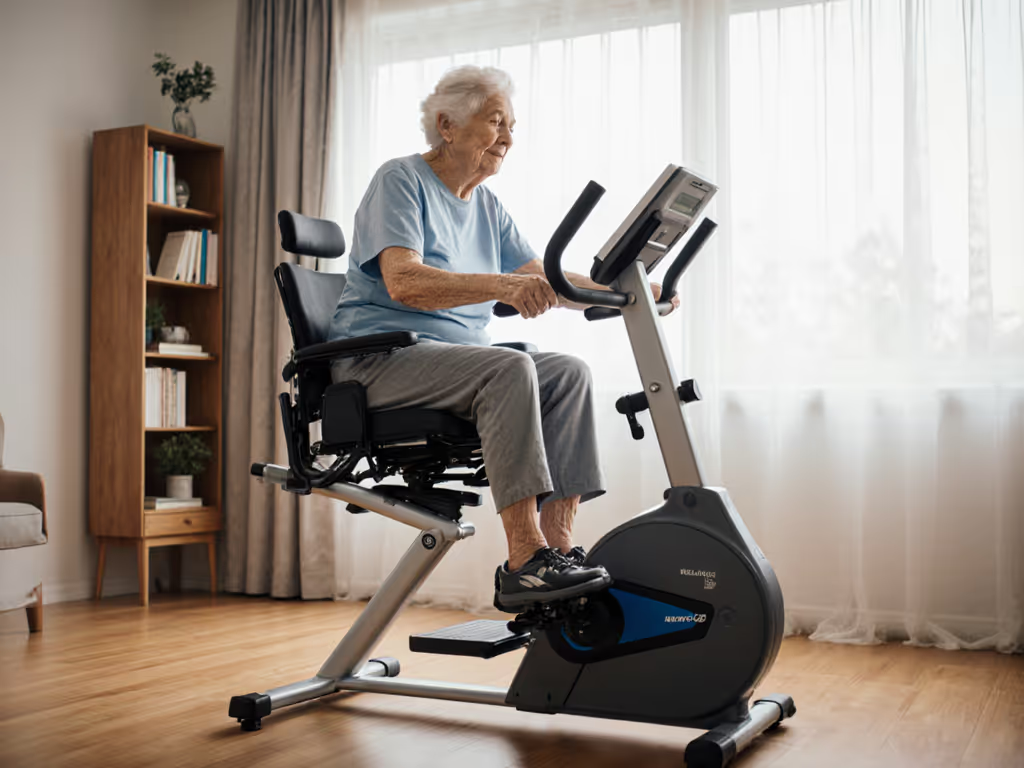
Schwinn A20 Recumbent Bike is positioned as a premium option in the reviewed market. Recumbent geometry reduces noise transmission through the seat and back support structure (your body acts as a vibration damper), making recumbents inherently quieter than upright positions for the same drivetrain.
Critical filter: Any vendor claiming "silent" without a measured decibel spec is selling perception, not product. Measured noise data at your likely resistance level (not minimum) is the only fact. Look for third-party testing reports, measured video reviews with a visible decibel meter, or user reports from verified purchasers in your climate and flooring type.
A friend once brought home a "quiet" smart bike that arrived buzzing like a beehive (loose bearing hardware and misaligned flywheel had been masked by factory padding). After methodical inspection (belt cleaned, flywheel re-centered, both main bearings replaced with standard cartridge units, every fastener torqued to spec), it whispered again. Ninety minutes of diagnostic and repair work; zero dollars to a service center. That experience taught me: the quietest bike is the one you can keep quiet through maintenance, not the one that ships quiet and degrades.
Step 4: Verify Modular Design and Spare Parts Availability
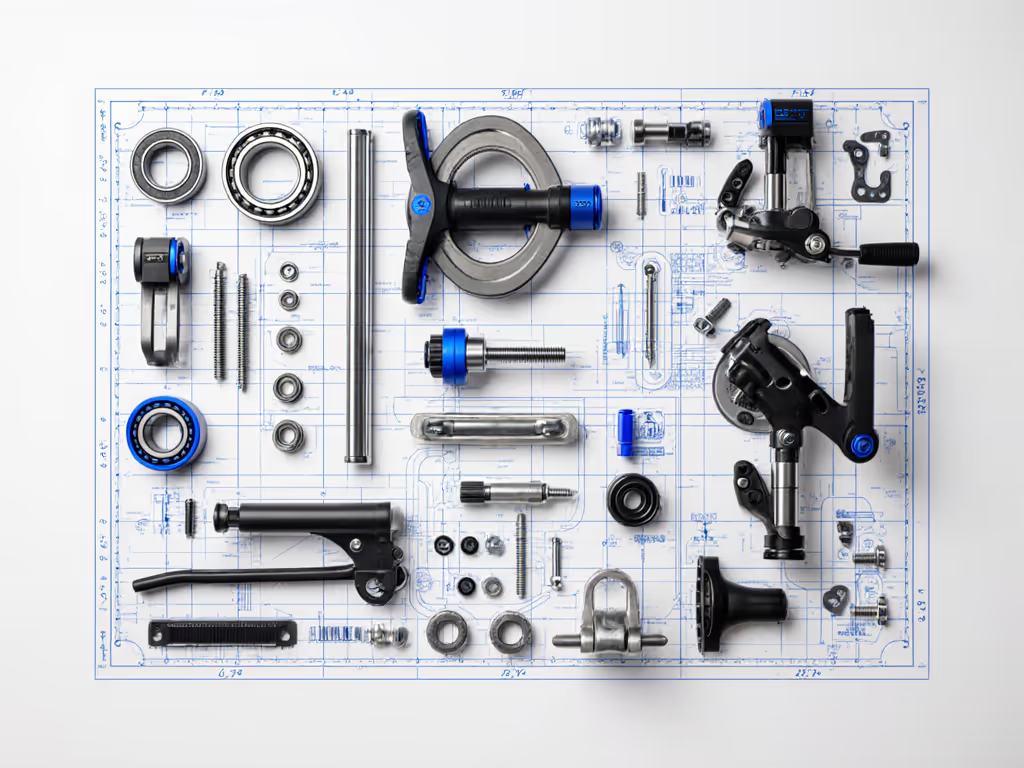
A bike certified quiet today means nothing if the drive belt vanishes in two years or the seat post doesn't fit any standard saddle.
Before finalizing your choice, request or research:
- Pedal interface: 9/16-inch is the global standard. If the manual lists "proprietary" or doesn't specify, contact the manufacturer. Standard pedals cost $20-60; proprietary replacements cost $100-200.
- Seat rail profile and clamp: Most use standard Vee or round-rail geometry. Verify that aftermarket saddles (Fizik, San Marco, Selle Italia) and seatposts fit without adapters. Non-standard rails mean you're locked into the brand's seat, which often costs $150+.
- Belt specs: If it's a belt-drive model, get the pitch and width. Cross-reference it against Gates, Bando, or similar OEM suppliers. If the spec is "proprietary" or unlisted, you'll pay penalty pricing for replacements.
- Console/display parts: Ask the vendor if the LCD or Bluetooth module is user-replaceable or if failure requires a full control board swap. Replaceable modules typically cost $50-120; integrated systems cost $300-600.
- Flywheel and bearing assembly: Determine if the flywheel is press-fit or bolted. Bolted equals user-serviceable (bearings replaceable for ~$40 per side). Press-fit equals manufacturer-only service.
Repairability is the ultimate quiet guarantee: a machine you can maintain stays quiet. A machine with proprietary parts that drift out of spec in year two becomes a landfill candidate.
Step 5: Test Multi-User Adjustability and Real-World Fit Range
Under-desk bikes are often household equipment, shared across users of different heights, leg lengths, and mobility needs. Noise can be exacerbated by poor fit: if your knees jam at extension, you'll over-grip the pedals and create micro-vibrations and creaking through the frame.
DeskCycle's adjustable pedal height (down to 27 inches) accommodates multiple users and various desk heights without frame stress. Flexispot's eight resistance levels and similar adjustability allow you to dial in comfort across a range of body proportions.
Measure before buying:
- Your inseam (inside leg, heel to crotch bone): Pedal height should allow 25-30 degrees of knee flex at the bottom of the stroke. Too high, and you'll overextend; too low, and you'll jam your knees or develop patellar pain. For posture fixes tailored to desk workers, follow our under-desk spinal alignment plan.
- Desk/workspace height: Standard desks are 28-30 inches. Pedal height must allow clearance (at least 2-3 inches) when seated normally. If pedal height is fixed above 30 inches, it won't fit under your desk, confirm adjustability.
- Q-factor (pedal width spacing): Narrower is better for desk work (your legs parallel your desk), but Q-factor is rarely published. Ask retailers or look for user reviews mentioning knee comfort.
Fix first, then decide if upgrade money is deserved. If a $400 machine doesn't fit your body and desk, a $1,500 upgrade won't help, you'll resent the purchase and use it twice.
Step 6: Assess Vibration Transmission and Floor Contact
Noise is only half the quietness equation; vibration transmission through flooring is often the culprit for neighbor complaints or household disruption.
A machine can measure 38 dB at the ear but transmit 45 dB of low-frequency rumble through hardwood to an apartment below. For room layout, mats, and acoustic isolation tips, see our quiet home gym setup guide. Vibration frequency matters: low rumble (20-50 Hz) is more disruptive across distances than high-frequency whine (2-5 kHz) that stays local.
Evaluate:
- Frame mass and rigidity: Heavier machines (40+ lbs) absorb vibration better than light ones. Under-desk bikes are typically 18-30 lbs, making them vulnerable to resonance. Check if the frame is single-tube (flexible) or box-tube (rigid).
- Foot pads and isolators: Does the bike include vibration-isolation feet or rubber dampeners? If feet are hard plastic, consider adding neoprene pads (about $8 for a set) to reduce transmission.
- Mounting options: Can you bolt it down, or is it designed for free placement? Bolting to a wooden desk frame transfers vibration upward; soft placement on a mat is better. Commercial vibration mats (acoustic foam or cork) cost $30-60 and can cut transmission by 40%.
- Your flooring: Hardwood and tile transmit vibration. Carpet dampens it. Concrete basement floors with no apartment below isolate best. Test on your actual floor, not a showroom.
Vibration is often the invisible culprit when a "quiet" bike still disturbs neighbors or sleepers.
Step 7: Perform Pre-Purchase Verification and True-Cost Accounting
Before committing, account for the full cost of ownership and hidden friction:
- Assembly labor: DeskCycle and similar compact models assemble in 10-15 minutes with a 4 mm hex key and nothing else. Recumbent models (Schwinn A20) often require more tools or patience, research user reviews about assembly friction.
- Accessory lock-in: Does the bike work with Zwift, Apple Fitness+, TrainerRoad, Kinomap? Bluetooth FTMS and ANT+ FE-C support are critical; proprietary apps are lock-in. Verify Bluetooth 5.0 or better for longer range and lower latency.
- Spare parts pricing: Call the vendor and ask: How much is a belt? A seat? A pedal? A replacement console? Write down the prices. If any are listed as "call for quote," treat that as a warning: pricing will be high and opaque.
- Warranty scope and out-of-warranty repair costs: 1-year parts is standard. 2-3 years is good. What about labor? Is assembly covered? Electronics? Many warranties exclude wear items (belt, bearings) explicitly. Read the fine print.
- Maintenance consumables: Some magnetic systems use sealed cartridge bearings (no lubrication, lifespan 2-5 years). Others use grease-packed bearings (maintenance every 100 hours). Budget accordingly.
Total cost of ownership for a sub-40dB bike over five years:
- Purchase: $300-800 (depending on model)
- Assembly/delivery: $0-100 (DIY vs. white-glove)
- Maintenance (belt, bearings, fasteners): $100-300
- Accessories (mat, pedals, seat upgrade): $50-150
- Total real cost: $450-1,350 over five years, or ~$90-270 per year.
Comparison: A $15/month Peloton or Zwift subscription costs $180 annually, and you own nothing. A properly maintained sub-40dB bike is cheaper, quieter, and yours.
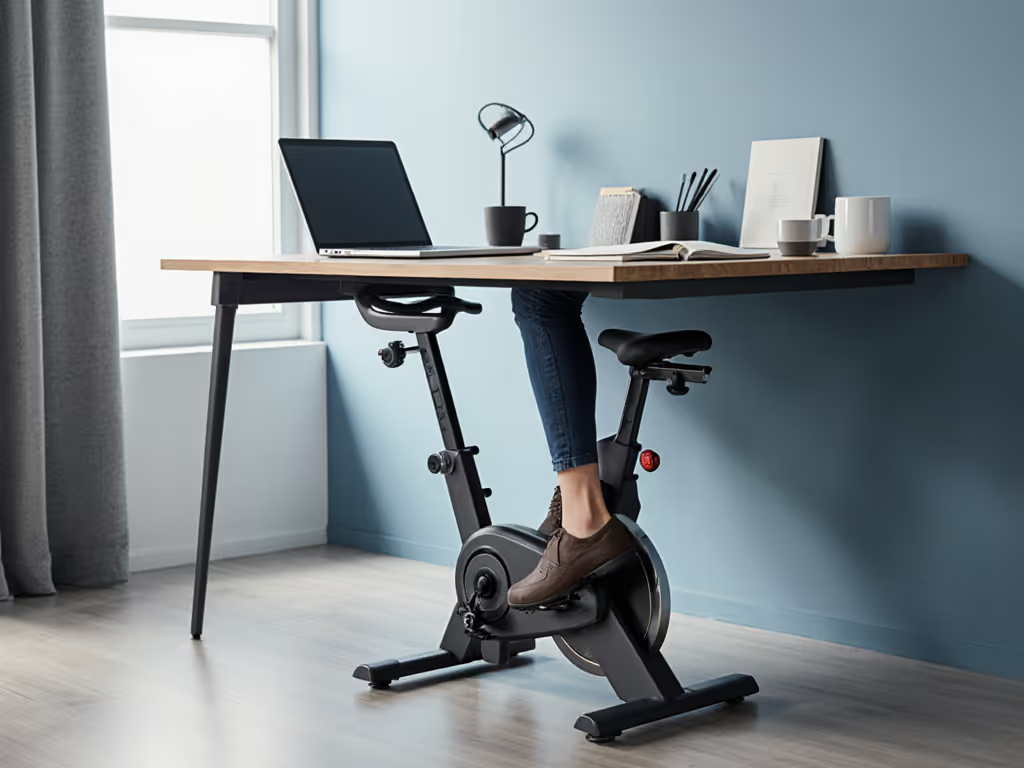
Noise-Certified Models: A Comparative Summary
Based on independent testing and user data:
DeskCycle (entry-level, best value for noise compliance)
- Confirmed smooth and quiet through independent editor trials
- Eight resistance levels (standard for compact models)
- Adjustable pedal height accommodates most desk heights
- 9/16" pedals (standard, easy replacement)
- Lightweight and portable for multi-user households
- Risk: entry-level electronics; console lifespan uncertain
Flexispot Exercise Bike with Desk (mid-range, for beginners)
- Eight resistance levels (twice as many as many competitors)
- Magnetic resistance for smooth, whisper-quiet operation
- Adjustable pedal height down to 27 inches
- LCD screen (not common on mini bikes)
- Designed to blend into workspace aesthetics
- Risk: fewer independent noise measurements; magnetic console failure a potential high cost
Yosuda Under Desk Bike Pro (mid-range, emphasis on portability)
- Belt-drive for quiet, fluid operation at lower resistance
- Bluetooth connectivity for app integration
- Under 18 pounds, assembles in 10-15 minutes
- Standard pedal interface
- Use under desk or on top of desk
- Risk: belt-drive requires tensioning maintenance; less data on long-term noise retention
Schwinn A20 Recumbent Bike (premium, for acoustics-plus-comfort)
- Recumbent seating geometry reduces noise transmission
- Heavier frame absorbs vibration better than compact models
- Larger footprint; not purely under-desk but discrete home office fit
- Risk: higher cost, heavier (harder to move), less portable for multi-user households
Safety-First Maintenance and Noise Preservation
Bike quietness is not a static feature, it degrades without maintenance. Use our exercise bike maintenance guide for step-by-step noise and durability checks. Here's a methodical checklist to preserve sub-40dB operation:
Monthly (light inspection)
- Listen for new squeaks or rattles during a 10-minute session
- Check that all visible fasteners (seat clamp, pedal cage screws, console mounts) are snug (no hammer blows needed; finger-tight plus a quarter turn)
- Wipe down the belt path and pulley grooves with a dry cloth to remove dust buildup (a common friction noise culprit)
Quarterly (deeper check)
- Check belt tension by hand: it should require moderate thumb pressure to deflect ~1/2 inch midway between pulleys. If it's loose, it'll slip and squeal; if over-tight, it'll cook the bearings. Consult your manual for the exact torque spec (often 80-120 in-lbs on tensioner bolts)
- Spin the flywheel by hand with the pedals disengaged (set resistance to zero). It should coast smoothly for 10+ seconds without wobble or grinding. Grinding equals bearing friction; consult the service manual for cartridge replacement (standard sealed bearings, about $40 per side)
- Inspect the pedal cage and bearings for corrosion (sweat, humidity). Light surface corrosion is cosmetic; deep pitting means replacement
Annually
- Professional bearing re-grease or cartridge replacement (if applicable)
- Console battery check and firmware updates (if applicable)
- Structural bolt re-torque (many fasteners settle after 50+ hours of use)
A methodical maintenance schedule and standard parts access are how you keep a quiet bike quiet. Neglect it, and vibration and noise creep back in month by month.
Summary and Final Verdict
Ultra-quiet office exercise bikes under 40dB are attainable and measurable, but only if you reject marketing claims and verify noise data independently, prioritize modular design with standard parts, and commit to maintenance.
For most households:
- Choose belt-drive or magnetic resistance: friction-based systems rarely achieve sub-40dB without professional tuning
- Verify adjustability: pedal height, seat rails, and Q-factor must match your body and desk geometry or you won't use it
- Demand spare parts transparency: standard pedals, belts, bearings, and saddle rails lower your long-term cost and reduce e-waste
- Test on your floor: measure noise and vibration in your actual environment (hardwood, apartment, carpet, basement), not a showroom
- Budget for maintenance: belt tension, bearing replacement, and fastener re-torque are how quiet bikes stay quiet
If you prioritize true silence, long-term repairability, and household harmony, DeskCycle offers the best noise-to-cost ratio for entry-level users, while Flexispot and Yosuda provide mid-range upgrades with magnetic resistance or belt-drive precision. Schwinn A20 is the premium choice if recumbent comfort and heavier damping are worth the footprint and cost.
Fix first, then decide if upgrade money is deserved. Buy a sub-40dB model with standard fasteners and published service guides, and you'll pedal in peace for years without guilt or guilt-inducing noise.
Related Articles