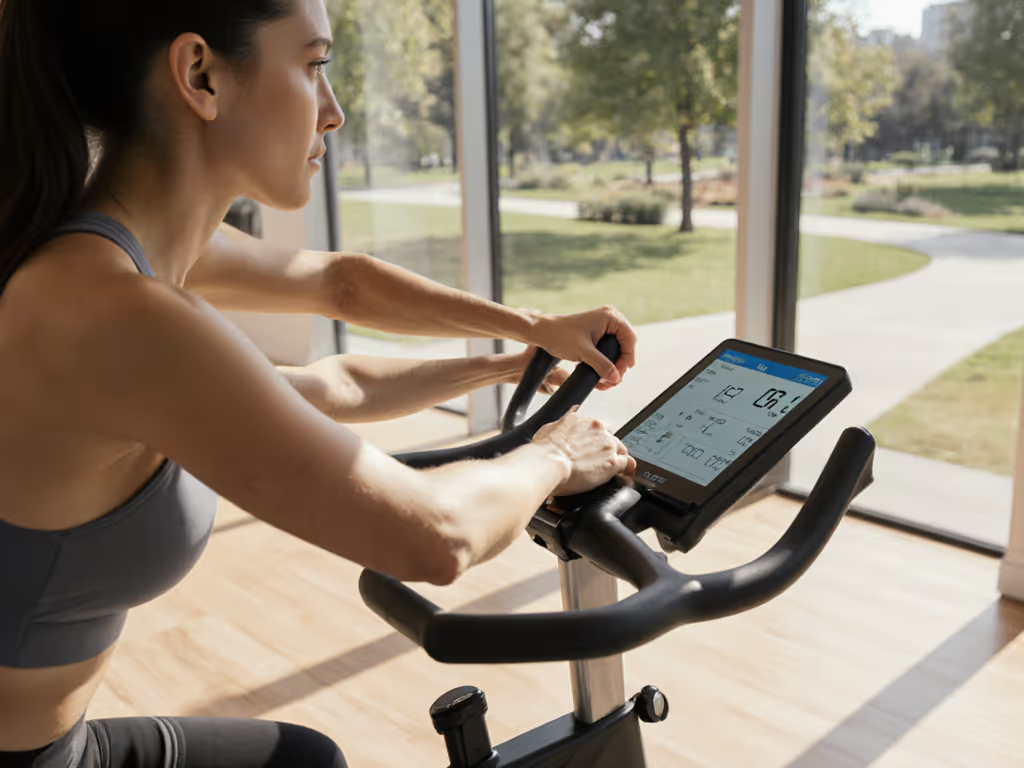
Exercise Bike First Trimester: Safety Guidelines
By Marta Kowalska • 23rd Feb
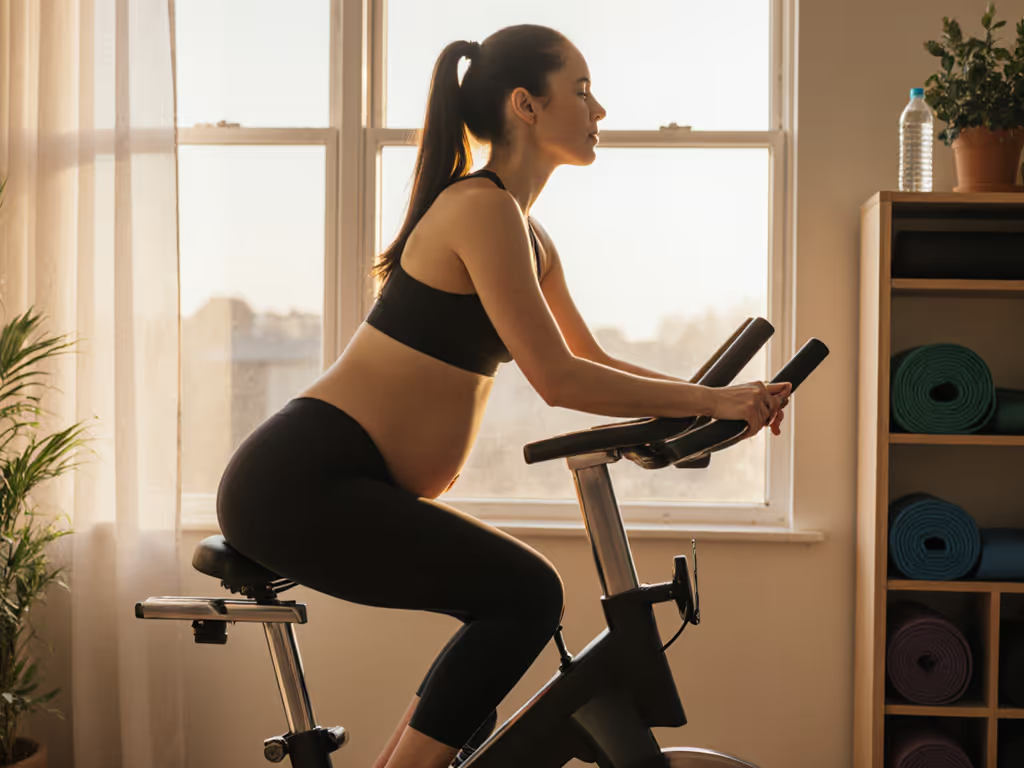
The first trimester brings rapid physiological shifts (hormone surges, ligament relaxation, and metabolic changes) that reshape how your body moves. Exercise bike, first trimester, workouts are medically endorsed as safe, yet the window for evidence-based guidance remains narrow, and many practitioners offer conflicting advice. This FAQ deep dive unpacks what the research actually says, how to monitor your body systematically, and when to pause.
Is It Safe to Use an Exercise Bike in the First Trimester?
Yes, for the majority of pregnant people with uncomplicated pregnancies. The American College of Obstetricians and Gynecologists (ACOG) confirms that physical activity does not increase your risk of miscarriage, low birth weight, or early delivery. Cycling offers low-impact cardiovascular benefit without the joint stress of running or the balance risk of outdoor routes. For more context, review the exercise bike health benefits backed by clinical research.
However, "safe" is contingent. If you have a history of miscarriage, cardiac or pulmonary disease, placenta previa, preeclampsia, severe anemia, or risk factors for preterm labor, seek explicit physician clearance before resuming any exercise. Safety always comes first; a methodical check-in with your provider is not caution, it is due diligence.
Why Is an Exercise Bike Gentler Than Outdoor Cycling During Early Pregnancy?
Three factors matter here:
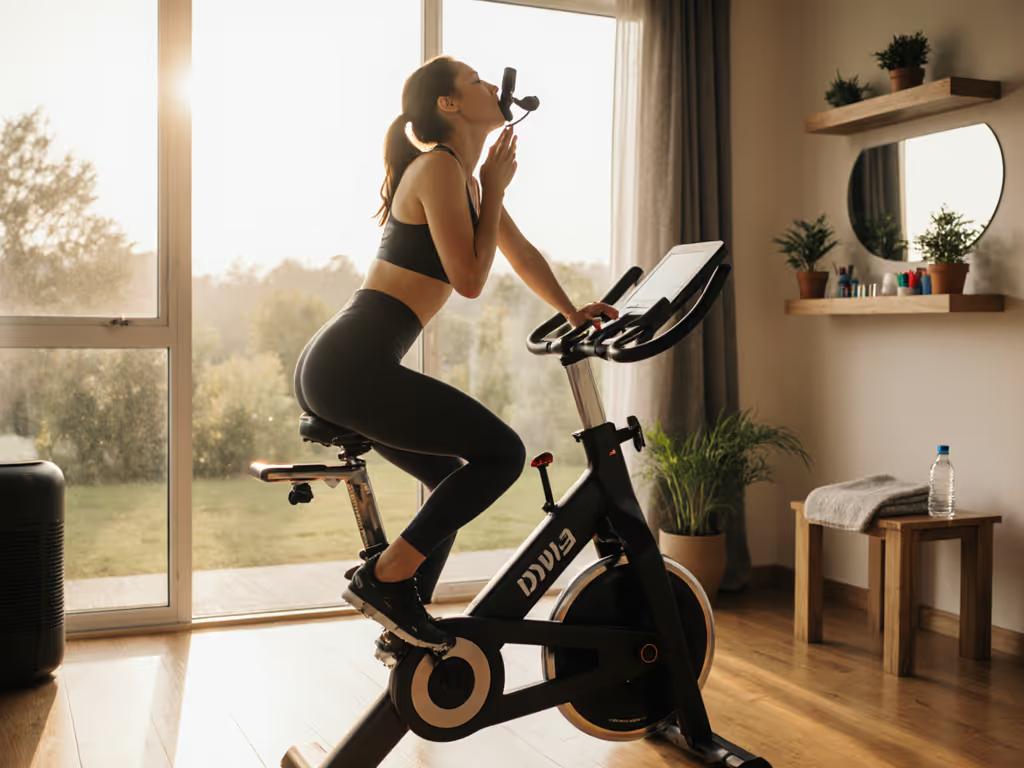
Controlled environment. Indoors, you eliminate weather unpredictability, uneven terrain, and obstacles that increase fall risk. Early pregnancy already shifts your center of gravity and loosens ligaments; outdoor variables compound that instability.
Consistent seating geometry. A stationary bike seat height, reach, and backrest remain fixed. You adjust once and repeat, lowering the cognitive load of rebalancing. Outdoor cycling demands micro-corrections on varying terrain, which is taxing when ligament laxity is active.
Heart rate and intensity management. Indoors, you control resistance and pace without surprise hills or wind resistance, making it easier to stay within the safe heart rate zone of below 140 bpm, or to use the "talk test" to gauge effort.
What Does "First Trimester" Actually Mean for Exercise Guidelines?
Weeks 1-12 of pregnancy. However, the first trimester is not monolithic. Your body changes progressively:
- Weeks 1-8: Nausea often peaks; energy plummets. Hormonal shifts are steep. Many people continue their pre-pregnancy routine, but morning sickness may make cycling uncomfortable.
- Weeks 9-12: Nausea may ease. Ligament relaxation becomes more pronounced. Your uterus is still mostly protected by the pelvic bones, so abdominal impact risk is lower than in later trimesters, but balance changes are real.
If you were a regular cyclist before pregnancy, moderate-intensity indoor cycling during weeks 1-12 is generally not contraindicated. If you are new to cycling, consult your provider before starting. Then follow our pregnancy bike modifications by trimester to adapt safely week by week.
How Do I Monitor Heart Rate and Intensity Safely?
Three evidence-based methods exist:
1. Heart rate cap. Keep your heart rate below 140 bpm. Use a chest strap or wrist monitor. Simple, objective, easy to track over time. If readings seem inconsistent, use our heart rate calibration guide to verify accuracy.
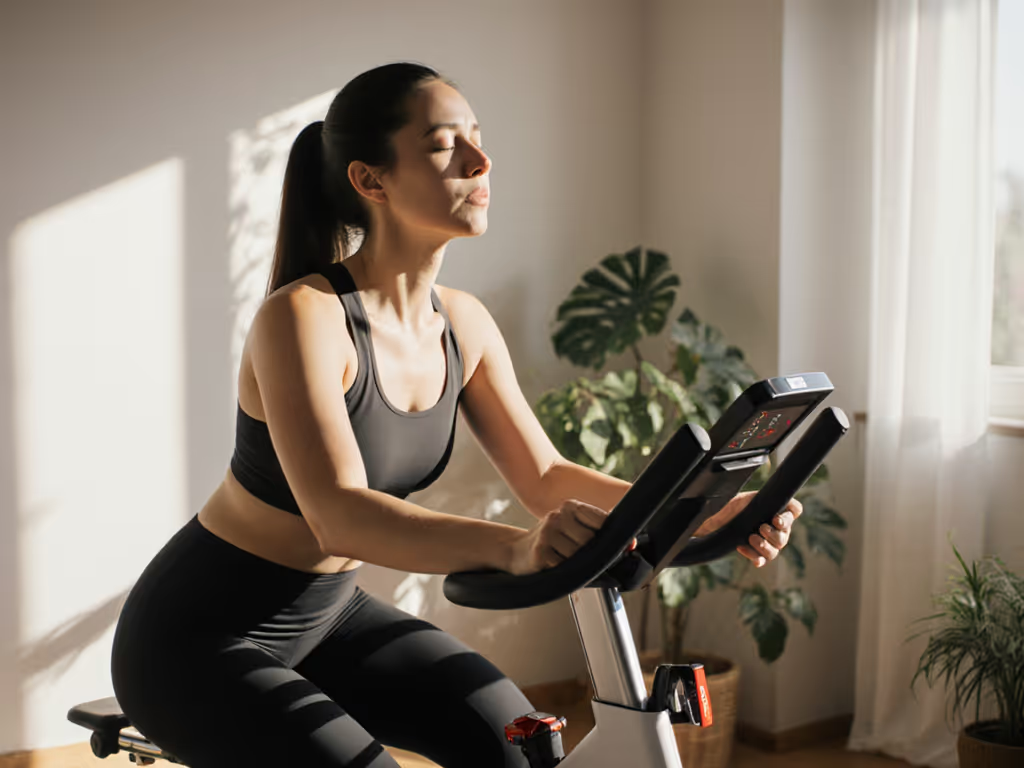
2. The "talk test." During exercise, you should be able to speak in complete sentences without gasping for air. If you cannot finish a sentence, you are working too hard. This is low-tech and intuitive.
3. Rate of Perceived Exertion (RPE) scale. Rate your effort 1-10. Aim for 4-6 ("light" to "moderate"). You should feel like you're working, but not straining.
Combine two of these. If your smart bike or app has power data, use it as a reference point, but do not become enslaved to a number. Your body is the instrument; the device is a tool. Methodical observation (noting how you feel before, during, and after) tells you more than any single metric.
What's This About "Nausea-Friendly" Cycling?
Morning sickness cycling is not a marketing term; it is a real friction point. Nausea peaks in weeks 6-10 for many people and can make upright posture, bouncing motion, or indoor air quality unbearable.
Two practical adjustments:
- Recumbent geometry. If you have access to a recumbent bike (fully reclined seat with back support), consider it. The reclined posture reduces abdominal pressure and may ease nausea. Silence is serviceable. A quiet recumbent allows you to focus inward without distraction.
- Timing and duration. Some people tolerate early morning cycling better than afternoon. Others prefer very short sessions (10-15 minutes) to build tolerance. Hydrate well, ensure the room is ventilated, and do not push intensity when nausea is active.
If cycling triggers nausea, try it on a day when symptoms are mildest. If nausea persists despite adjustments, switch temporarily to lower-impact options (walking, swimming, stationary rowing) until the worst passes.
What Are the Red Flags That Mean I Should Stop Immediately?
Stop exercise and call your healthcare provider if you experience:
- Vaginal bleeding or fluid leakage
- Pelvic or abdominal pain or pressure
- Shortness of breath before you start exercising (not during, as that can be normal)
- Chest pain, dizziness, or fainting
- Painful contractions
- Calf pain or swelling (sign of clotting risk)
These are not mild warnings; they are circuit-breaker signals. Cycle another day if any of these appear.
Should I Modify My Bike Setup in the First Trimester?
Yes, preemptively. Here is the methodical checklist:
Seat height: Ensure a slight knee bend at the bottom of the pedal stroke, with no hyperextension. Pregnancy ligament laxity makes knee overextension painful and risky.
Seat position (fore/aft): As your belly begins to grow (visible by week 10 for many), slide the seat back slightly to give your abdomen clearance. You should never feel pressure on your belly during pedaling.
Handlebar reach: Keep a neutral spine. Do not lean far forward; this compresses your abdomen and strains your lower back. Upright is safer than aero.
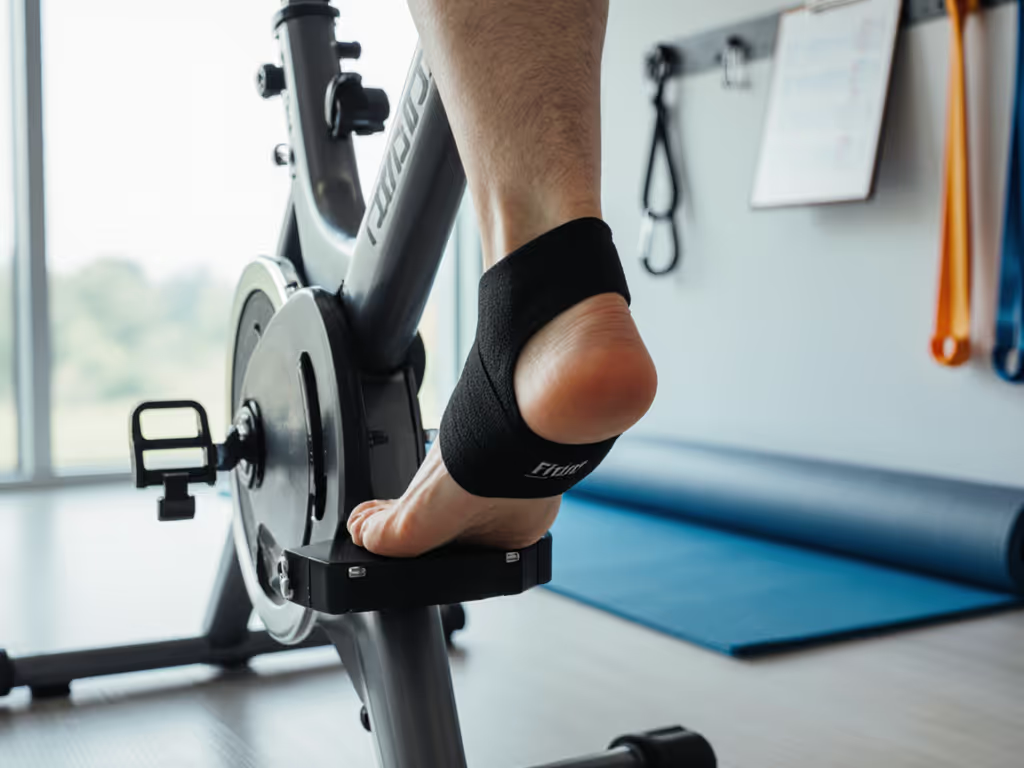
Pedal type: Standard, flat pedals or platforms are safer than clipless during pregnancy. If you use clipless, be prepared to unclip quickly if balance feels off.
Make these adjustments early and document them (a simple phone photo or note). Fix first, then decide if later upgrades are deserved (this philosophy applies to bike maintenance as much as pregnancy training). A dialed-in bike is a safe bike. For a step-by-step walkthrough of seat height and reach, see our exercise bike setup guide.
How Often and How Long Should I Ride?
Aim for 20-30 minutes per session, 3-5 days per week, at low to moderate intensity. This aligns with ACOG's recommendation of 150 minutes of moderate-intensity activity weekly.
Break it up if needed:
- Three 30-minute sessions beat one 90-minute grind when nausea or fatigue is high.
- Include 5 minutes of easy warm-up and cool-down.
- If you are new to exercise, start with 2 sessions per week at 15-20 minutes and build gradually.
Consistency matters more than intensity in the first trimester. A quiet, manageable routine you repeat is better than heroic sessions that leave you drained.
What About Power and Cadence Metrics?
If your bike reports power (watts) and cadence (RPM), they are helpful reference points but not gospel. First trimester is not the time to chase personal records or follow a structured power-based training plan.
Instead:
- Aim for a cadence of 80-90 RPM (smooth, controlled).
- Keep power output moderate. If pre-pregnancy you could sustain 150 watts, stay around 80-100 watts now.
- Use metrics to confirm you are not drifting into high intensity, not to push harder.
Data is useful only if it serves safety. If a number tempts you to ignore how your body feels, log off and rely on the talk test.
Should I Be Concerned About Lying on My Back During Cycling?
No. Cycling is upright or reclined but not supine. Supine (flat on your back) crunches and leg lifts are contraindicated after 16 weeks because they can compress major blood vessels and impair placental blood flow. Cycling positions do not pose this risk in the first trimester, though comfort may shift by week 12.
Final Check: Am I Ready to Ride?
Before your first session:
- Physician approval: Confirm with your provider, especially if you have any high-risk factors.
- Bike setup: Seat height, reach, and pedal security are dialed in and documented.
- Heart rate method: You've chosen RPE, talk test, or a monitor, or a combination.
- Know your stop signals: You can recite the red flags from memory.
- Hydration and ventilation: Your riding space is cool, well-lit, and has water within reach.
Then ride. Methodically, safely, and with the knowledge that consistency, not intensity, is your goal. Silence is serviceable. So is a steady, manageable rhythm that honors both your pregnancy and your right to stay active on your own terms.
Related Articles