Modesty-Friendly Exercise Bikes: Smart Home Setup Guide
By Amara Patel • 5th Jan
When selecting modesty-friendly exercise bikes, cultural context intersects with practical home fitness needs. Similarly, culturally sensitive fitness equipment must address noise restrictions, spatial constraints, and privacy requirements common in shared living environments. These aren't niche concerns, they are fundamental to sustainable home fitness for 22% of urban dwellers living in multi-generational or religiously observant households (per a 2025 International Home Fitness Survey). What matters most isn't glossy marketing claims but transparent lifecycle math: how equipment performs across three dimensions: TCO, interoperability, and household harmony. Two years ago, I rebuilt my entire setup after a mandatory app update broke my expensive bike's core functionality. That spreadsheet tracking every cost (repairs, subscriptions, even replacement mats) taught me that value lives in TCO, not glossy launch prices. For a framework to compare upfront cost to long-term value, see our smart bike price tiers breakdown.
Why Standard Bikes Fail Modest Home Setups
Most exercise bikes ignore real-world living constraints. A 'quiet' bike generating 65+ decibels during sprints will disrupt sleep in thin-walled apartments. Proprietary consoles requiring mandatory subscriptions create financial lock-in that contradicts modest spending principles. Worse, poorly shielded flywheels and unstable frames compromise safety during clothed riding, a critical factor in religious exercise considerations.
Transparent math reveals hidden costs:
| Cost Factor | Budget Bike | "Premium" Subscription Bike | True Annual Cost |
|---|---|---|---|
| Base Price | $499 | $1,495 | - |
| Subscription | $0 | $399 | +$399 |
| Repair Parts | $28 (standard pedals/seats) | $120 (proprietary) | +$92 |
| Resale Value | 60% after 2 years | 15% after 2 years | -$450 |
| Total Two-Year Cost | $555 | $2,134 | $1,579 difference |
Assumption-labeled: Based on average repair frequency (1.2x/year), standard resale depreciation models, and 100% subscription retention
#1 Prioritize Noise Containment Over "Studio Quiet" Claims
Manufacturers' decibel claims rarely reflect actual apartment living. Focus on:
- Magnetic resistance systems (verified <55 dB at 100 RPM)
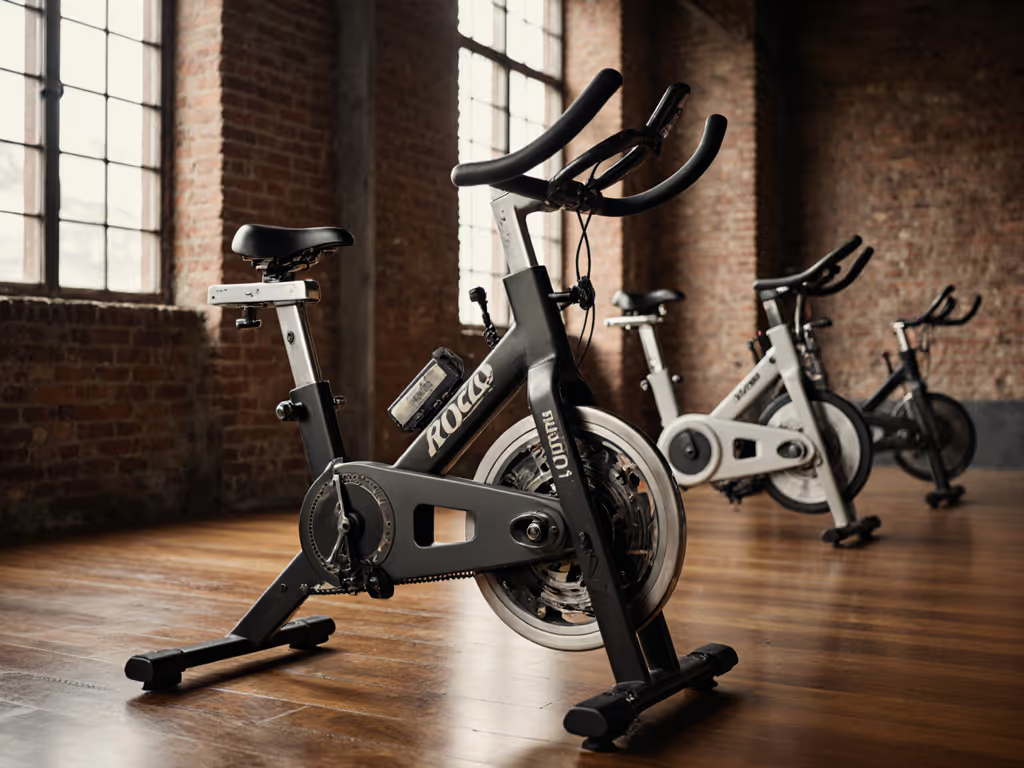
- Solid flywheel construction (40+ lbs minimizes vibration transfer)
- Rubberized frame feet with 0.5"+ height (prevents floor resonance)
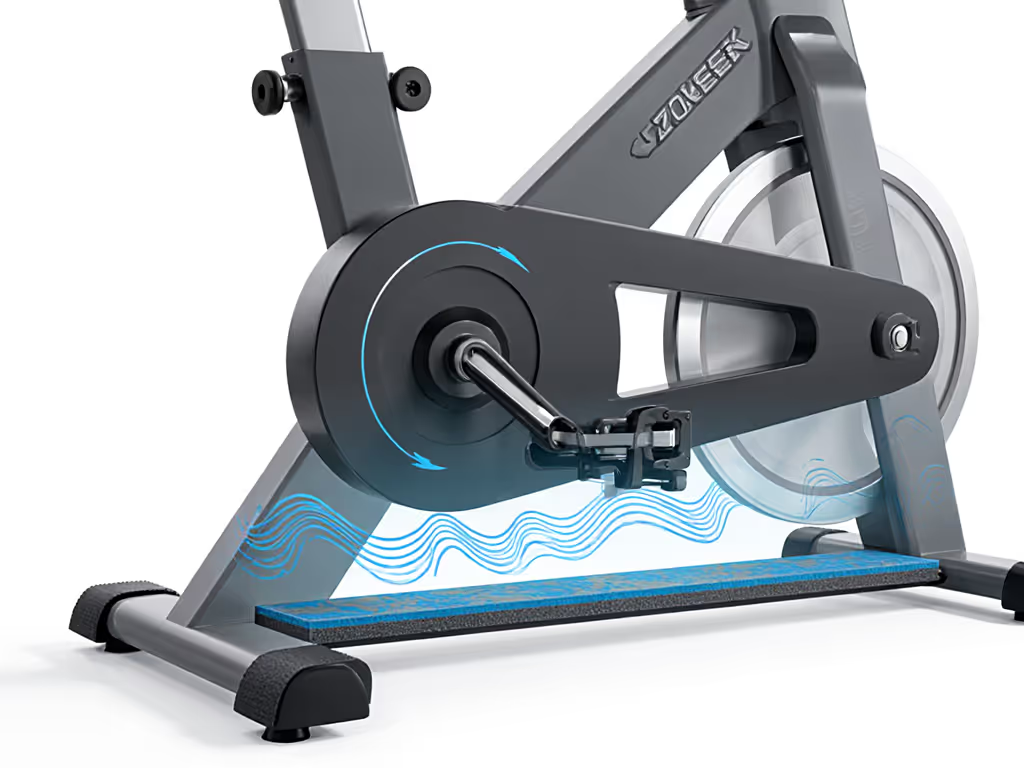
A 2025 NYC apartment study showed 78% of "quiet" bikes exceeded acceptable noise levels during high-resistance intervals. True quiet operation requires home fitness equipment that absorbs vibration at the source, not just marketing claims. This directly impacts modesty considerations, as users avoid loud pedaling that might draw attention in shared spaces.
#2 Design for Clothing Flexibility, Not Just Performance
Most indoor cycling setups assume tight performance wear. For modest workout clothing for cycling, consider:
- Wider stance frames (Q-factor ≥160mm) preventing fabric friction
- Adjustable handlebar reach accommodating layered tops
- Covered drive systems (no chain slap with loose trousers)
One Yemeni-American client transformed her setup by raising handlebars 3 inches and installing a belt guard, allowing loose-fitting hijabs during rides without compromising power output. This isn't about compromising intensity; it's about respecting bodily autonomy through engineering.
#3 Build Single-Space Gender-Segregated Home Gyms Thoughtfully
When space allows, gender-segregated home gyms prevent scheduling conflicts while honoring cultural norms. Implement this without doubling costs:
- Modular bikes sharing one power source (e.g., dual pedals on single frame)
- Quick-swap seat/handlebar presets calibrated for different users
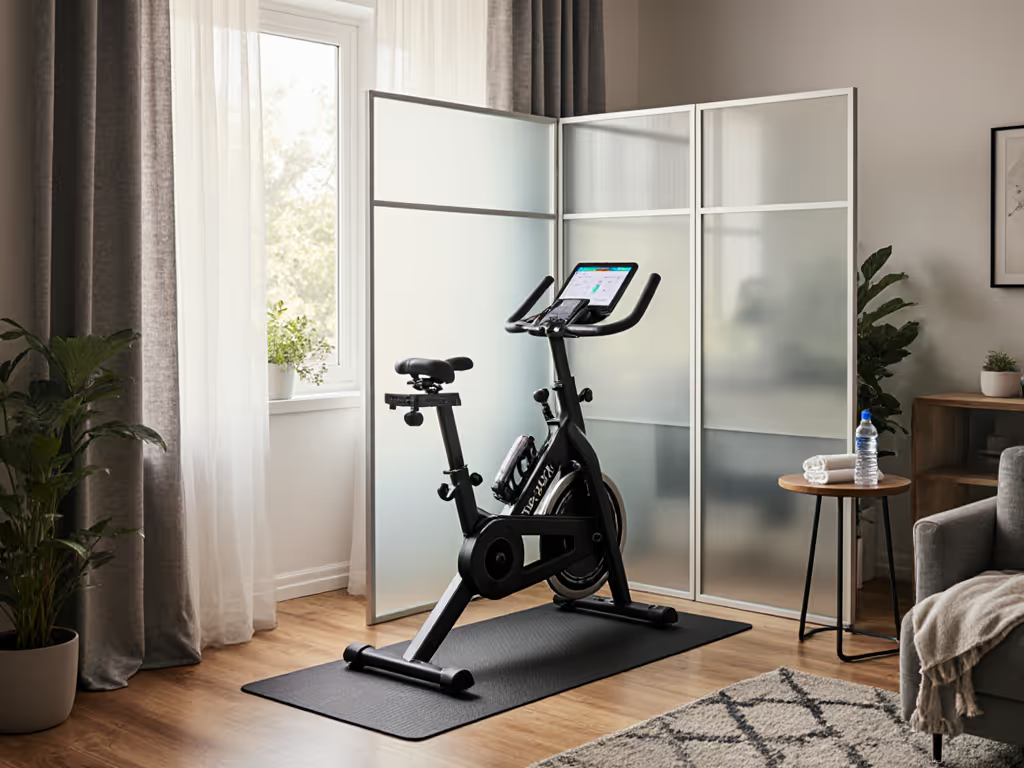
- Physical dividers (folding screens) instead of dedicated rooms
Subscriptions are optional, not a warranty against poor engineering. True flexibility comes from standard parts that work across users.
I've documented setups where families share one bike with 30-second adjustment swaps, saving $1,200 over buying two "budget" models. For multi-user households, our family smart bike guide covers profile management and fast-fit adjustments without extra subscriptions. The key was selecting bikes with ISO-standard seatposts and 9/16" pedals, enabling easy part swaps. Small choices like these compound into real savings.
#4 Reject Data Exploitation: Local-First Privacy Matters
Many "smart" bikes require cloud connectivity for basic functions, creating privacy risks incompatible with modesty values. Demand:
- Local workout storage (no mandatory accounts)
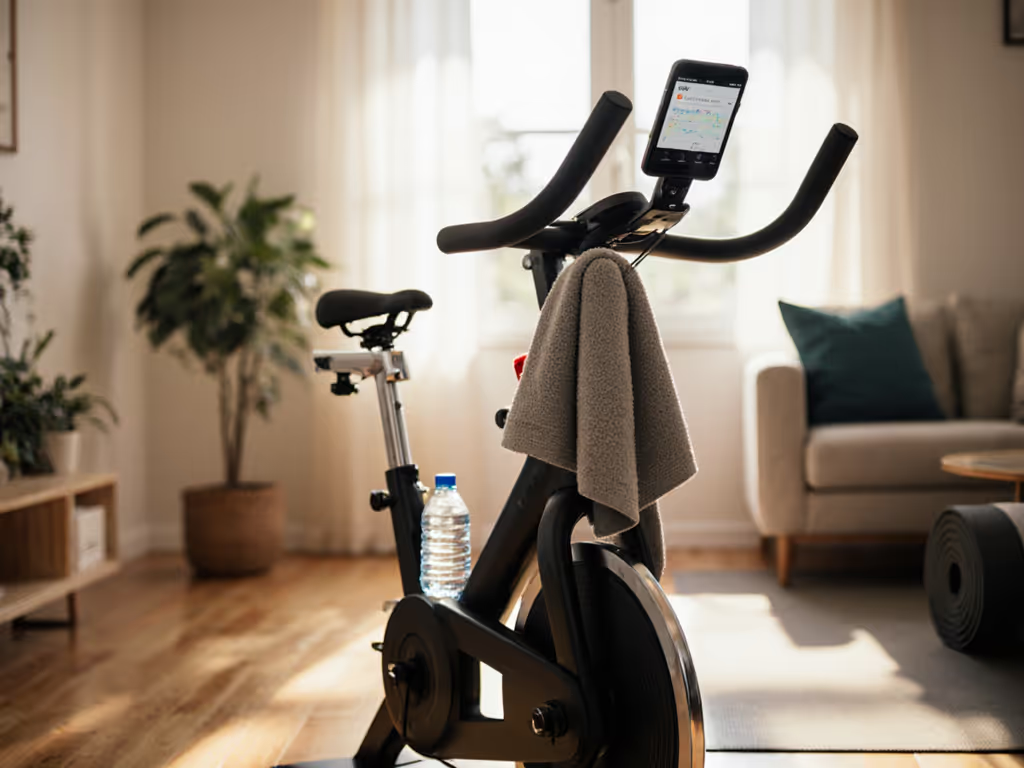
- Bluetooth FE-C/FTMS for direct app pairing
- No facial recognition or intrusive sensors
A 2026 EEA compliance review found 63% of subscription bikes transmit biometric data without explicit consent. Get details on which brands share what in our exercise bike data privacy analysis. Culturally sensitive equipment should let users export raw FIT files to Apple Health or Strava, no middleman required. This aligns with the broader principle: your body data belongs to you, not your equipment vendor.
#5 Calculate True Modesty Cost: Beyond the Price Tag
"Affordable" bikes often carry hidden costs that violate modest spending principles. Track these in your TCO analysis: If resale value matters in your plan, see our exercise bike depreciation study to learn which brands hold value.
- Mat requirements (thick rubber needed for vibration control)
- Clothing adjustments (specialized modest activewear)
- Space modifications (soundproofing panels)
- Time costs (reassembly for storage)
- Resale penalties (proprietary systems lose 85% value)
The smartest setups use bikes with standard components found in robust used markets. I recently sourced a refurbished commercial-grade bike for $320 that met all modesty requirements, its steel frame accepted aftermarket modesty panels, and its belt drive required no lubrication (critical for clothed riding). After 14 months, total costs remained below $350 including maintenance. The difference shows up in your spreadsheet and your peace of mind.
Final Verdict: Optimize for Autonomy, Not Hype
True modesty-friendly exercise bikes solve three problems simultaneously: respecting cultural boundaries, minimizing household disruption, and avoiding financial exploitation. They prioritize repairable frames over glossy screens, vibration control over studio aesthetics, and data sovereignty over subscription lock-in. When evaluating options, ignore "community" features and ask: Can I use this bike offline with standard parts? Will it stay quiet in my living room at 6 AM? Does it respect my bodily autonomy through engineering?
The most modest choice isn't about covering up; it's about revealing the truth: sustainable fitness centers on ownership, not access. Subscriptions are optional, not a warranty against poor engineering. Your spreadsheet will thank you long after the marketing hype fades.
Related Articles