Recumbent Bikes for Retirees: Transfer Safety & TCO
By Amara Patel • 12th Apr
When shopping for an exercise bike for a recumbent setup, most retirees focus on comfort and ease of mounting. Yet the true measure of a wise purchase emerges only after months of use, when recurring costs, warranty surprises, and repairability challenges reveal the real price of ownership. Value lives in TCO, not glossy launch prices. This guide maps the total cost of ownership for recumbent cycling equipment across the models most relevant to aging users, emphasizing transfer safety features, warranty depth, and long-term parts availability that directly affect your financial and physical comfort over five to ten years.
Why TCO Matters More for Retirees
Seniors typically exercise consistently. The CDC recommends older adults accumulate at least 30 minutes of moderate-intensity activity daily, and many retirees stick to that goal. That regularity, hundreds of rides per year, means small durability gaps compound quickly. A recumbent bike's true cost includes not just the sticker price but the cumulative expense of repairs, replacement parts, warranty coverage, and, critically, whether you can service or resell the equipment when needs change. A bike purchased at $500 with a one-year warranty and proprietary components may cost $1,200 to maintain over five years. The same investment in a modular design with a three-year structural warranty and standard parts can remain functional and repairable indefinitely.
1. Transfer Safety Features: The Foundation of Senior Selection
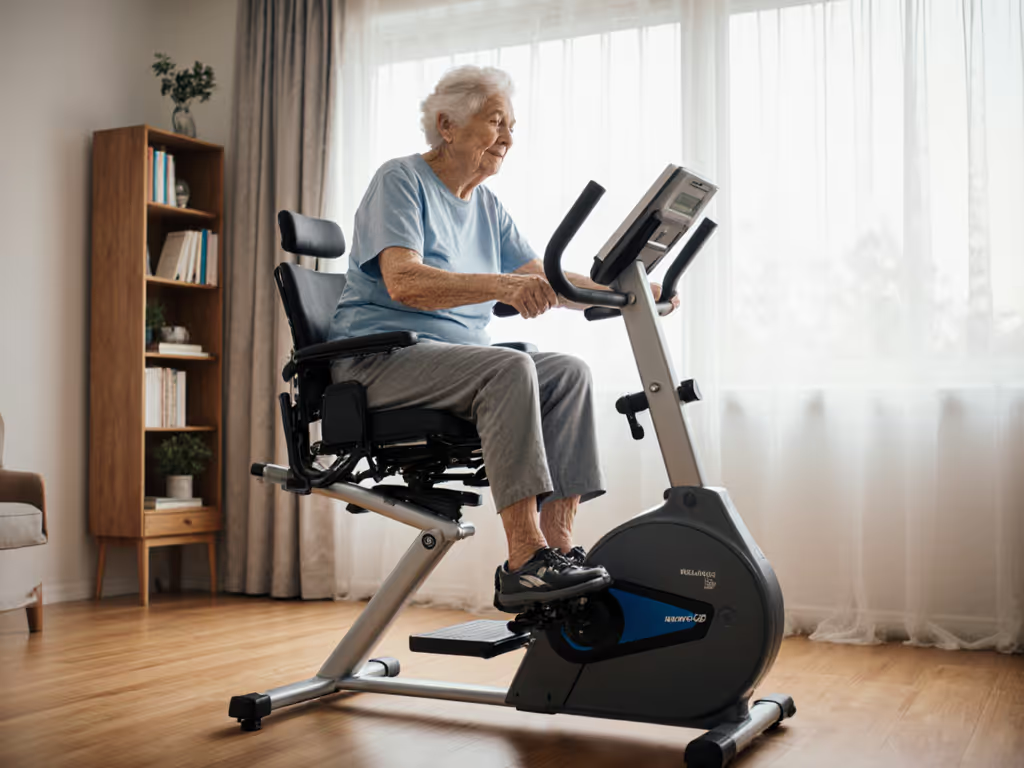
Before evaluating price or features, prioritize transfer safety features on your recumbent bike. For a senior-specific checklist covering step-through frames, stability, and comfort, see our senior exercise bike guide. A step-through design (a lowered or open frame geometry that requires minimal knee lift when sitting and standing) is non-negotiable for retirees managing mobility concerns, arthritis, or balance uncertainty. Models like the Vanswe RB405 and Vanswe RB407 are marketed specifically to seniors because they combine a low entry point with an ergonomic, stable seat and high weight capacity, ensuring safe, pain-free mounting and dismounting.
Look for these transfer-safety markers: a seat height no higher than mid-shin when standing, armrests or hand grips positioned to support balance during entry, and a wide, stable wheelbase that prevents tipping when you shift your center of gravity. Magnetic resistance (which the Vanswe models employ) is also safer than friction-based systems because it eliminates exposed moving parts and allows silent, smooth power adjustments, which is critical if a rider needs to pause or slow without fumbling for a control.
2. Warranty Depth and Structural Clarity
A warranty is only valuable if it clearly covers what fails. Most recumbent bikes sold for under $600 carry a one-year manufacturer warranty, covering defects in material and workmanship. However, some models distinguish between frame, electrical/mechanical parts, console, and labor, creating confusion about what is actually protected. To decode coverage tiers and fine print across brands, use our exercise bike warranty comparison.
The Life Fitness RS3, a commercial-grade model, exemplifies transparent tiering: Lifetime coverage on the frame, 5 years on parts, 3 years on the console, and 1 year of labor. This structure reflects the reality that frames rarely fail, electronics age fastest, and labor costs escalate over time. In contrast, the Niceday recumbent bike stands alone among consumer models reviewed with a lifetime warranty, a rare commitment that signals confidence in design and parts longevity. That advantage justifies its $599.99 price point for buyers planning a decade-plus lifespan.
When comparing warranties, ask: Does the warranty cover normal wear (belt tension, bearing squeaks, seat degradation), or only manufacturing defects? Is there a service network, or does repair require shipping? Can you replace components yourself, or must you use authorized service? These answers directly inflate or deflate your five-year TCO.
3. Parts Availability and Repairability: The Hidden Cost Driver
A bike with a five-year structural warranty is only as good as the availability of replacement parts. For upkeep schedules and common fixes that extend lifespan, see our exercise bike maintenance. Proprietary seatposts, non-standard pedal threads, and custom console connectors lock you into the original manufacturer, or leave you stranded when parts disappear from the catalog.
Recumbent bikes sold under $600 typically use standardized components: 9/16-inch pedals (universal), easily replaceable seatposts, and magnetic brake systems with off-the-shelf wear items. The Sunny Health & Fitness Essential Recumbent Exercise Bike, available for under $300, sacrifices some build quality but retains this modularity. Two years ago, I helped a retired cyclist rebuild a premium stationary bike from used parts after a costly proprietary seat mount cracked. She tracked every cost: new frame ($150 used), standard seatpost ($30), new pedals ($40), bearing service ($60). Total: $280, versus a $900 replacement or $1,500 factory repair. That transparency (the spreadsheet showing every dollar over a lifetime) changed how I evaluate cycling gym equipment. Buy once, maintain forever, if you choose parts and brands with deep used markets and standard components.
4. Comparative TCO Model: Five-Year Lifecycle Breakdown
To move beyond sticker shock, map the total cost of five-year ownership across three representative bikes:
Scenario A: Budget Entry (Sunny Health & Fitness Essential)
- Purchase: $300
- Warranty: 1 year (parts and labor)
- Year 2-5 maintenance (belt tension, bearing service, seat pad): ~$200 total
- Extended repair beyond warranty (console failure, electrical): ~$150 (estimated)
- 5-Year TCO: ~$650
- Resale value: $80-120
- Net cost: ~$530-570
Scenario B: Mid-Range (Vanswe RB407)
- Purchase: ~$450-550 (typical pricing for senior-focused models)
- Warranty: 1 year (typical)
- Year 2-5 maintenance: ~$150 (better build quality means fewer issues)
- Extended repair: ~$100 (estimated)
- 5-Year TCO: ~$700-850
- Resale value: $200-300
- Net cost: ~$400-650
Scenario C: Premium (Life Fitness RS3 or Niceday with Lifetime Warranty)
- Purchase: $1,200-1,500+ (commercial-grade or extended warranty models)
- Warranty: Lifetime frame, 3-5 years parts (clear tiering)
- Year 2-5 maintenance: ~$100 (high-quality bearing and seal design)
- Extended repair: $50 (covered under extended warranty or easily sourced parts)
- 5-Year TCO: ~$1,350-1,700
- Resale value: $500-800
- Net cost: ~$550-1,200
The data reveals a counterintuitive truth: the mid-range, well-designed bike often yields the best TCO for retirees. Premium models justify their cost only if you plan 8-12 years of use and value the confidence of a named brand service network. Budget bikes risk false economy, since low upfront cost masks higher repair likelihood and faster obsolescence.
5. Cardiovascular Protocols for Seniors and Sensor Accuracy
Recumbent bikes marketed for retirees should support cardiovascular protocols for seniors, which typically center on heart-rate monitoring and low-impact, steady-state effort. A recumbent setup using contact heart rate sensors (grips you squeeze gently while riding) is far more accessible for older users than chest straps or arm-band sensors. The Vanswe and Life Fitness models include contact sensors, which is why they appear frequently in senior-focused reviews.
Sensor accuracy degrades over time, usually within one to three years for consumer-grade electronics. If readings start drifting, recalibrate with our heart rate calibration guide. Verify that your bike allows manual heart-rate entry or sync to external devices (Apple Health, Garmin, Strava) so that inaccurate onboard sensors do not derail your fitness tracking. Open-standard connectivity (Bluetooth FTMS and ANT+) future-proofs your data independence if the bike's app stagnates or the brand discontinues support. Many retirees pair a recumbent bike with a budget chest-strap monitor ($50-80) as a failsafe; that redundancy costs less than replacing a failing console.
6. Balance Support and Stability for Multi-User Households
Retirees often share homes with grandchildren, adult children, or partners of varying heights and mobility. A recumbent bike's stability footprint, seat range, and handlebar adjustability directly affect whether everyone can use it safely. Balance support exercise bikes feature wide wheelbases (typically 28-32 inches), low centers of gravity, and armrests at multiple heights.
Seek models with wide seat-height ranges (12-16 inches is common) and fore-aft seat adjustability. The Vanswe models accommodate users from 5'0" to 6'2" and up to 300-330 lbs., a range that covers multi-generational use. Instability (a narrow base or excessive seat travel) forces you to choose a single user size, reducing the bike's utility and resale appeal. Compact recumbent bikes designed for apartments sacrifice stability; commercial or semi-commercial models prioritize it. For retirees in multi-user households, stability is a non-negotiable feature that extends useful life and justifies a higher purchase price.
7. Low-Impact Cycling for Aging Joints: Mechanical Advantage
Low impact cycling for aging bodies depends on smooth, predictable resistance curves and zero friction jolts. Magnetic resistance systems (used in Vanswe, Sole, and Life Fitness models) deliver this smoothness, whereas belt-driven or friction-pad systems introduce lag and inconsistency. Over hundreds of rides, mechanical inconsistency stresses joints and encourages compensatory body position, a path to discomfort or injury.
Measure smoothness by inspecting resistance specifications: units should list wattage increments (10-25W steps are ideal for steady effort), not vague "levels." Verify that the flywheel mass is adequate (typically 6-8 kg for home recumbent models); lightweight flywheels cause jerky resistance changes. Test the bike in-person if possible, or rely on reviews noting cadence stability and absence of grinding noise. Silence and smoothness correlate strongly with joint safety and long-term enjoyment, factors that directly suppress the likelihood of you abandoning the bike and losing your investment.
Summary and Final Verdict
For retirees selecting a recumbent exercise bike, the path to value is not the lowest sticker price but the clearest warranty, most accessible parts ecosystem, and lowest projected maintenance burden. Transfer safety features (step-through geometry, stable base, and contact heart-rate monitoring) are mandatory, not optional. Warranty depth that distinguishes frame, parts, and labor reveals whether a manufacturer stands behind durability; a three-to-five-year parts guarantee and lifetime frame coverage signal confidence.
Among the models reviewed, the Vanswe RB407 delivers the best balance of senior-specific design, one-year warranty, and under-$600 pricing for buyers prioritizing immediate comfort and ease of mounting. Its modular design and magnetic resistance system support long-term repairability, and used-market resale is steady, thanks to broad recognition among retirees.
For buyers planning a full decade of use and willing to invest upfront for peace of mind, the Niceday recumbent bike at $599.99 with a lifetime warranty is the standout choice. The lifetime frame coverage and commercial-grade build quality compress TCO risk, and the brand's commitment to extended warranties signals a user-retention philosophy aligned with your own.
Whatever model you select, resist the urge to chase the latest app ecosystem or bundled content offerings. If you're narrowing choices, compare models in our top recumbent bikes. A recumbent bike's value compounds over years through reliable hardware, spare-part access, and resale certainty, not through flashy touchscreens or exclusive streaming memberships. Invest in a well-designed, warrantied frame with standard components, pair it with a broad-spectrum fitness app, and commit to modest annual maintenance. That approach (Buy once, maintain forever) will reward you with thousands of low-impact, joint-friendly rides and a piece of equipment you can eventually pass on, resell, or repurpose without regret.
Related Articles