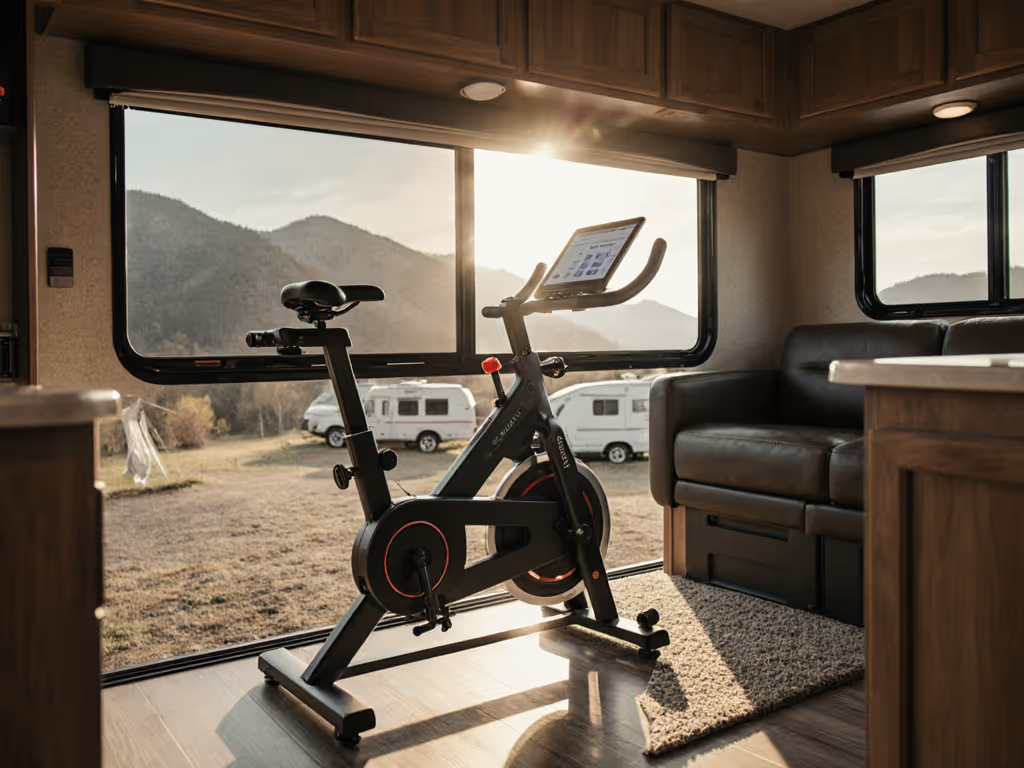
Exercise Bikes for Trainers: Durability & Client Tracking
By Marta Kowalska • 19th Feb
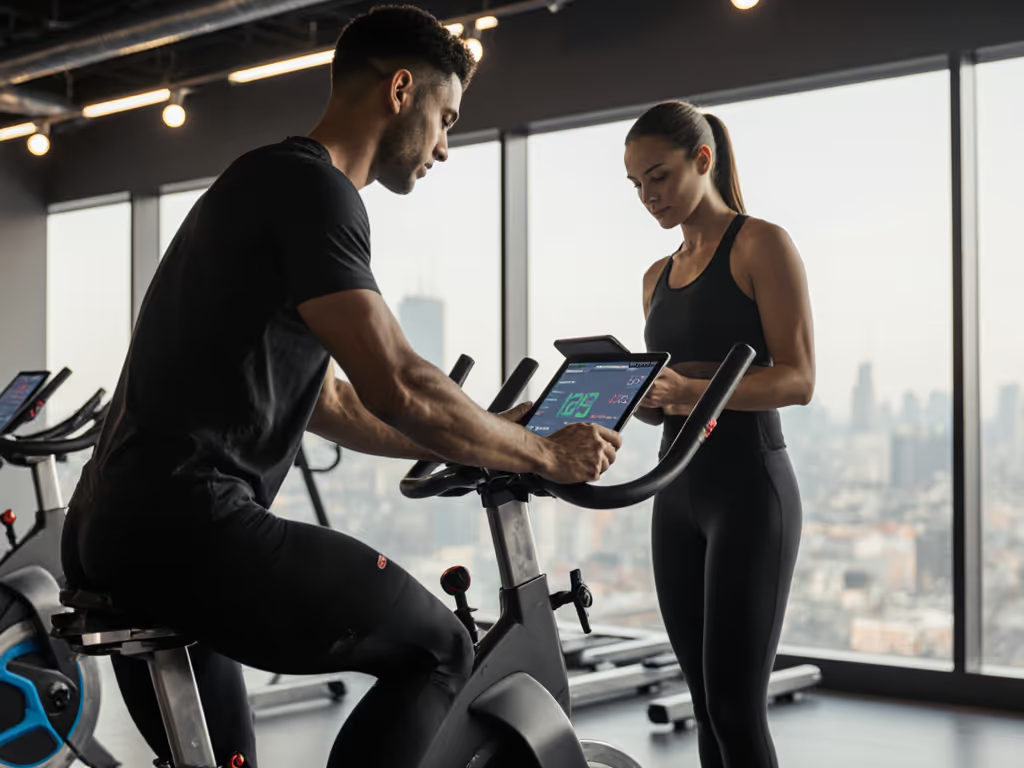
When you're programming workouts for clients (whether in a studio, boutique gym, or hybrid setting), your exercise bike must do two things without compromise: track data accurately and last through years of varied user intensity without becoming a liability. Yet the market floods trainers with choices that often confuse durability with mere sturdiness, and "smart" with unnecessarily fragile. This guide cuts through the noise with a methodical look at what durability and client-tracking capability actually mean for commercial setups.
What Makes a Commercial Bike "Durable" for Trainer Use?
Durability in a trainer's context isn't about a single feature; it's about a system of resilience. A bike must survive sweat corrosion, the torque of standing climbs from users of varying weights, 100+ rides per week, and regular transport if you're sharing equipment across locations. Most commercial bikes claim durability through steel frames and heavy flywheels, but the weak points emerge in details: bottom-bracket play, bearing wear, belt or chain tension drift, and console reliability over 3-5 years. For step-by-step upkeep that prevents these failures, see our exercise bike maintenance guide.
The NordicTrack Commercial S22i, positioned as the best overall commercial option, demonstrates this principle through a 32-pound flywheel and a steel frame rated for users up to 350 pounds. Its weight capacity and heavy-duty construction are essential, but durability also depends on whether calibration holds true over time and whether replacement parts remain available at reasonable cost (factors rarely advertised).
The Trainer's Dilemma: Smart Features vs. Repairability
Here's where skepticism becomes essential. Smart exercise bikes promise integrated programming, live coaching, and client data streaming (features that sound ideal for trainers managing multiple clients). The Echelon Connect EX-8s, for example, boasts a 24-inch curved HD touchscreen, 32 magnetic resistance levels, and Bluetooth integration, appealing to trainers who want app flexibility. Similarly, the Peloton Bike offers thousands of live and on-demand classes with a 21.5-inch touchscreen and leaderboard competition.
But here's the pragmatic reality: every additional circuit, sensor, and app dependency introduces failure points. I once worked with a training studio that invested in four high-end smart bikes (the kind with fully integrated platforms and premium touchscreens). Within 18 months, one console had stopped responding to updates, another suffered Bluetooth dropout during live classes, and a third simply wouldn't boot without cloud connectivity. Ninety minutes of troubleshooting, a firmware reset, and two calls to support later, they were running again. That doesn't scale when you're managing 50 client sessions a week.
The deeper issue: proprietary pedals, seatposts, and battery-backed consoles mean when something fails, you're often locked into the manufacturer's replacement parts and pricing. To avoid lock-in and plan upgrades, review our aftermarket parts comparison. Standard components (a 9/16-inch pedal thread, tool-free seat rails, universal handlebar attachments) cost pennies more to engineer but preserve trainer autonomy.
Client Tracking & Data Portability: Where Most Bikes Fall Short
Trainers need to track client performance, not to feed a single platform's algorithm, but to build accountability and measure progress. Ideally, a bike would log power output, cadence, and heart rate, and then let you export that data to Apple Health, Strava, or a spreadsheet. If heart rate readings are inconsistent, follow our heart rate calibration guide to verify accuracy before blaming the bike or app. Rarely does it work that smoothly.
The ProForm Studio Bike Pro 22, presented as a Peloton alternative at a lower price point ($1,299 vs. over $1,400 for Peloton), integrates with iFIT and offers over 17,000 live and on-demand classes via a 22-inch HD touchscreen. This flexibility is valuable. Yet iFIT's data export remains restricted, and switching to a different platform later means starting from zero, your client history doesn't follow them. That's vendor lock-in by design.
By contrast, bikes supporting open standards like Bluetooth FTMS (Fitness Machine Service) and ANT+ FE-C can pair with dozens of third-party apps: Zwift, TrainerRoad, Apple Fitness+, Kinomap. A client's power curve and ride history sync seamlessly across platforms. But how many trainers verify this interoperability before purchase? Marketing rarely highlights it because it's not flashy, it is just responsible.
Noise & Vibration: The Hidden Durability Killer
Noise isn't just a comfort issue; it's a durability signal. A bike that vibrates excessively or hums loudly often has misalignment issues (flywheel eccentricity, bearing play, or belt wear) that worsen over time. Sweat accelerates corrosion on iron components, and vibration shakes salt crystals deeper into crevices.
The Bowflex Velocore, noted for its streaming capability, and many magnetic-resistance bikes claim "quiet operation," yet that's tested in a warehouse, not a Manhattan apartment at 6 a.m. Real noise measurement matters: specifications should cite decibel levels and vibration frequency, not just marketing language. Commercial bikes designed for group fitness studios often tolerate more vibration because they're on dedicated flooring. For a trainer setting up in a shared space, a 65-decibel bike becomes a 4 a.m. complaint from downstairs neighbors.
Comparing Key Options: Features vs. Serviceability Trade-offs
Let's examine the candidates mentioned in current reviews:
NordicTrack Commercial S22i ($1,999): Heavy 32-pound flywheel, 24 resistance levels, 22-inch HD touchscreen with tilt/rotate for off-bike workouts, supports 350-pound users, integrates with iFIT. The steel frame and capacity inspire confidence, but the touchscreen dependency and iFIT lock-in are concerns. Parts availability is reasonable through NordicTrack's network, but not all fasteners are standard.
ProForm Studio Bike Pro 22 ($1,299): Lighter price, similar iFIT integration, 22-inch screen, 22 resistance levels, 350-pound capacity. Represents genuine value if iFIT's content library suits your clients. Durability is comparable to the S22i, though some users report screen stability issues under heavy resistance.
Echelon Connect EX-8s ($3,079): Premium pricing, 24-inch curved screen, 32 resistance levels, dual-speaker setup, shock absorption system. Echelon Fit App offers 40+ daily live workouts, but reviews acknowledge the app "pales in comparison to Peloton and iFIT." The high cost and premium features mask moderate software depth. A tester noted the screen shakes slightly under high resistance (a red flag for frame rigidity over time).
Peloton Bike ($1,445): Gold standard for motivation and community, thousands of classes, 21.5-inch touchscreen with live leaderboard. Excellent build quality, but membership is mandatory, and warranty is often disappointing. Data is locked into Peloton's ecosystem unless you manually export workouts.
YOSUDA Indoor Cycling Bike ($279): Budget option with basic features, no touchscreen, manual resistance adjustment, minimal electronics. Durability fundamentals are solid: heavy flywheel, adjustable seat and handlebars, steel frame. This is the serviceability win: almost nothing to break, parts are standard or easily sourced, and a trainer can maintain it with basic tools. The trade-off is zero client tracking integration; you'd need to log metrics manually or add an external heart rate monitor and power meter.
The Real Cost of Ownership: Beyond the Price Tag
Commercial bikes often hide total cost in subscriptions, replacement parts, and support. An Echelon bike at $3,079 requires the Echelon Fit app at $34.99/month (or $11.99 with limited features), which is $420 to $600 annually. Peloton membership adds $14.99/month minimum, roughly $180/year. Multiply that across 10 clients, and you're tracking significant ongoing expense. For a deeper look at long-term costs and alternatives without subscriptions, see our 3-year smart bike cost breakdown.
Repair costs compound the picture. A replacement console for a high-end smart bike can run $400-$600, often only available through the manufacturer. A standard pedal for a YOSUDA or any bike using 9/16-inch threads costs $30-$80 from any cycling retailer. Bearing replacement on a well-designed bike takes 30 minutes and costs $40; on a proprietary sealed system, it's a $300 service call or full-bike replacement.
Fix what fails, prevent what's next - this principle separates equipment that outlasts client tenures from bikes that become expensive anchors.
FAQ: What Trainers Actually Need to Know
Q: Should I prioritize app integration or durability? A: Neither is worth sacrificing the other. Seek bikes with robust open standards (Bluetooth FTMS/ANT+) so you're not locked into one platform. Durability means standard fasteners, published maintenance schedules, and 3-5 year parts availability. If a bike forces you to choose, durability wins, you can add external power meters and sensors; you can't repair a proprietary console glued to the frame.
Q: How do I verify durability before buying? A: Request a full parts diagram and ask the manufacturer: "What's the replacement cost for [flywheel/bearings/console/pedals]," "How long are spares guaranteed available," and "Can I swap components with aftermarket equivalents?" If the answer is evasive, move on. Check whether the bike uses standard 9/16-inch pedals, removable seat rails, and tool-free adjustments. Review user forums for reports of bearing wear, belt slippage, or electronic failures after 18-24 months.
Q: What about noise in a multi-client studio? A: Request a decibel measurement under load, not just idle. Air bikes (like the Assault Fitness AssaultBike Classic at $699) are inherently louder but extremely durable. Magnetic resistance bikes run quieter if the flywheel is balanced and bearings are clean. If noise matters, budget for vibration-dampening mats and test in your actual space before committing.
Q: Can I run multiple apps on one bike? A: Only if the bike supports open standards. Most Peloton-ecosystem bikes lock you in; iFIT bikes can pair with some external apps but with data-sync friction. True flexibility requires ANT+ or Bluetooth FTMS native support. Check the spec sheet for explicit protocol support, not just "app connectivity."
Q: What's the best bike for a budget-conscious trainer starting out? A: The YOSUDA Indoor Cycling Bike ($279) offers serviceability and durability for the price. Pair it with a standalone power meter (Garmin Vector pedals or a Wahoo KICKR cadence sensor) if client data is essential. You'll invest more in peripherals but gain flexibility and reduce your risk if one component fails. As your client base grows, upgrade to a smarter platform with proven longevity.
The Maintenance Reality: Preventive Care That Extends Life
Gym lore about exercise bikes often centers on "just wipe it down and you're done." That's how you end up with sweat-corroded frames, seized bearings, and belt slip by month six. Here's what actually matters:
Belt and Flywheel Alignment: Misaligned belts accelerate wear and create vibration. Check monthly by spinning the flywheel by hand and watching for lateral drift. If present, realign using the manufacturer's procedure and torque fasteners to spec (usually 8-12 Nm for flywheel bolts, depending on the model).
Bearing Lubrication: Quality commercial bikes use sealed cartridge bearings rated for 3-5 years under heavy use. Once they're dry, you're replacing them, not oiling them mid-life. Budget for replacement around year 3 if usage exceeds 100 rides/week.
Sweat and Corrosion: Salt eats steel. Require clients to wipe handlebars and seat post immediately after use, not later. Store bikes in climate-controlled spaces (below 70% humidity). If corrosion begins on steel components, wire-brush and apply a thin coat of light machine oil or silicone spray.
Console and Electrical: Touchscreens age; firmware updates sometimes brick hardware. Back up any client data regularly, and never rely on the console as your sole record-keeping source. Pair the bike with external apps or a spreadsheet for redundancy.
Summary and Final Verdict
The best exercise bike for trainers balances durability, client-tracking capability, and cost transparency. There's no single answer because trainer needs vary: a boutique studio paying premium prices expects integrated live classes and community features; a personal trainer running in a home gym prioritizes quietness, serviceability, and multi-app flexibility; a high-volume group-fitness facility needs reliability above aesthetic considerations.
If you demand full feature integration and community engagement, the NordicTrack Commercial S22i ($1,999) or ProForm Studio Bike Pro 22 ($1,299) deliver solid value through iFIT's depth and 350-pound capacity. Build maintenance into your budget, verify parts availability with the manufacturer before purchase, and expect to replace consumables by year 3.
If you want flexibility and open-standard interoperability, choose a bike supporting Bluetooth FTMS and ANT+ FE-C (confirm this in writing before buying), even if it lacks an integrated screen. Pair it with a tablet running Zwift, TrainerRoad, or Apple Fitness+, and you've eliminated vendor lock-in. Client data syncs freely; you retain portability.
If budget and serviceability are your anchors, the YOSUDA Indoor Cycling Bike ($279) punches well above its price through standard components and mechanical simplicity. Accept that you're trading integrated programming for autonomy and longevity. Add external smart features piecemeal as your client base justifies the expense.
Regardless of choice, demand transparency: full parts diagrams, published maintenance intervals, replacement part costs, and warranty scope covering labor, not just parts. Ask the manufacturer about real-world failure modes from existing commercial installations, not just feature lists.
The bike that survives four years of 80+ weekly rides, requires only standard maintenance, keeps your clients engaged across multiple platforms, and doesn't wake the neighbors at 5:45 a.m. is the bike that paid for itself, not in dollars, but in trust, reputation, and the freedom to upgrade or repair on your terms, not the manufacturer's schedule.
Related Articles